

ENTERTAINMENT RSS Streams
Restaurant chains refocus on food quality to bring back diners - CNBC
- Restaurant chains refocus on food quality to bring back diners CNBC
- 12 Chain Restaurants Making Big Changes in 2026 FinanceBuzz
- Restaurant chains revamp menus with better food to attract diners and boost sales amid changing consumer habits. Pluang
- Stretch your dining dollars for the rest of 2026 Daily Herald
Categories: ENTERTAINMENT RSS Streams
UK's Russell Brand a 'sexual predator', victims tell his sentencing for rape and sexual assault - Reuters
- UK's Russell Brand a 'sexual predator', victims tell his sentencing for rape and sexual assault Reuters
- Prosecution calls for long jail term as Russell Brand is sentenced for rape and sexual assault – latest updates The Guardian
- Russell Brand sentencing for rape and sexual assault: Follow live BBC
- Russell Brand's convictions renew spotlight on media — and a culture — that may have looked away AP News
- Russell Brand faces sentencing Monday for rape and sexual assaults WTNH.com
Categories: ENTERTAINMENT RSS Streams
Bears QB Caleb Williams undaunted by 4-INT night in win over Bucs: 'I'm going to keep grippin' it, keep rippin' it' - NFL.com
- Bears QB Caleb Williams undaunted by 4-INT night in win over Bucs: 'I'm going to keep grippin' it, keep rippin' it' NFL.com
- Bears 27-24 Buccaneers (Nov 8, 2026) Game Recap ESPN
- Bears overcome Caleb Williams' interceptions for 'SNF' win; resetting CFP race after Week 10 CBS Sports
- Caleb Williams: I could throw 100 picks and I wouldn’t get gun-shy NBC Sports
- Bears overcome 5 turnovers to beat Buccaneers, pledge to 'keep ripping it' Yahoo Sports
Categories: ENTERTAINMENT RSS Streams
Scientists discover a surprising link between acorns and lyme disease - Science Daily
Categories: ENTERTAINMENT RSS Streams
Common supplement could help fight psoriasis, scientists discover - Science Daily
Categories: ENTERTAINMENT RSS Streams
Death toll from migrant boat found with bodies on board south of Greece increases to 14 - AP News
Death toll from migrant boat found with bodies on board south of Greece increases to 14 AP NewsSee more headlines & perspectives on Google News
Categories: ENTERTAINMENT RSS Streams
When your gut bacteria run out of fiber, they may start eating your gut lining - Science Daily
Categories: ENTERTAINMENT RSS Streams
Column | Your stroke risk is 72 percent higher during these 3 hours of the day - The Washington Post
Column | Your stroke risk is 72 percent higher during these 3 hours of the day The Washington Post
Categories: ENTERTAINMENT RSS Streams
Find out who's in the running for this year's Booker Prize
The winner of this year's literary award will be announced in London on Monday.
Categories: ENTERTAINMENT RSS Streams
Live Updates: Trump says he sees no reason to escalate war with Iran, touts his long-term goals in the conflict - CBS News
- Live Updates: Trump says he sees no reason to escalate war with Iran, touts his long-term goals in the conflict CBS News
- US and Iran are quietly negotiating as Middle East remains on edge. Here’s what to know CNN
- Here Are the Difficult Options Trump Is Weighing to Resolve the War in Iran The New York Times
- Iran war live: Diplomacy intensifies as Qatar PM to meet Trump and Vance Al Jazeera
- Trump says he is highly unlikely to order Iran strikes if talks progress Reuters
Categories: ENTERTAINMENT RSS Streams
'I've got a band now' - Club anthem star Shygirl on why she's switching up her sound
Fans know her for big electronic bangers, but the singer and DJ has come back with an indie-tinged sound.
Categories: ENTERTAINMENT RSS Streams
'I've got a band now' - Club anthem star Shygirl on why she's switching up her sound
Fans know her for big electronic bangers, but the singer and DJ has come back with an indie-tinged sound.
Categories: ENTERTAINMENT RSS Streams
2026 NFL trade deadline: Who's buying, who's selling, plus biggest names, led by Jonathan Taylor - CBS Sports
- 2026 NFL trade deadline: Who's buying, who's selling, plus biggest names, led by Jonathan Taylor CBS Sports
- 2026 NFL trade deadline: Proposing deals for Tony Pollard, Riq Woolen, others ESPN
- What I’m hearing about Derrick Henry, Jonathan Taylor, Garrett Wilson rumors at the NFL trade deadline - The Athletic The New York Times
- 10 NFL trades that need to happen: Derrick Henry to Patriots, Budda Baker to Bills among options CBS Sports
- 2026 NFL Trade Deadline Live Updates and Analysis for November 9 Bleacher Report
Categories: ENTERTAINMENT RSS Streams
Prince William has 'learned' to live without Prince Harry as royal feud reaches breaking point: expert
Prince William has "learned" to live without Prince Harry as their bitter feud appears to have pushed the brothers past the point of no return.
"Harry has never believed he has anything to apologize for," Christopher Andersen, author of "Kate!," told Fox News Digital.
"William had never believed he had anything to apologize for. Reconciliation is not in the cards. It shouldn't come as any surprise that William views Harry as having betrayed not only the royal family but the institution of the monarchy itself. Harry returning to the U.K. and picking up where he left off before Megxit just rubbed salt into an already festering wound."
"These are two extraordinarily strong and stubborn men who have, sadly, learned over the past few years that they can live without each other," Andersen said. "If the death of their grandmother, Queen Elizabeth II, their father's coronation and the cancer battles of both the king and the Princess of Wales didn't bring them together, it's very hard to imagine what would."
Fox News may be compensated for or earn a commission if you buy through our referral links.
Andersen's comments came after a source told People magazine that the Duke and Duchess of Sussex are not planning to apologize to William and his wife, Kate Middleton. The U.K.'s Express previously reported that Harry and Meghan hoped to apologize to the Prince and Princess of Wales over comments made during their 2021 interview with Oprah Winfrey as part of an effort to reconcile.
A source close to Harry and Meghan told People that the report was "nonsense."
WATCH HERE: PRINCE HARRY MUST APOLOGIZE TO THE ROYAL FAMILY: AUTHOR
The Express reported that the couple specifically planned to apologize over Meghan's revelation during the televised interview that there had been "concerns and conversations" within the royal family about how dark Prince Archie's skin might be before he was born.
People reported that while Harry has made progress in rebuilding his relationship with his father, King Charles, "there’s no movement, especially on William’s side," said a source.
Fox News Digital reached out to Archewell and Kensington Palace for comment.
British broadcaster Helena Chard told Fox News Digital that William is unlikely to forgive his brother. She noted that William once saw Harry as a supportive "wingman" as he prepared for his future role as king.
"Reportedly, Prince William finds it impossible to forgive his brother for leaving him to cope with the pressure of being future king on his own," Chard said. "The sheer stress and upset caused to his family over the past few years is impossible to forgive."
Harry has publicly said he would like to reconcile with his family. In May 2025, he told the BBC that he would "love reconciliation." In October 2026, he told GQ that "the most important thing is to reconcile. That's the key point."
GET ENTERTAINMENT SCOOP DELIVERED RIGHT TO YOUR EMAIL BY CLICKING HERE
Royal commentator Meredith Constant told Fox News Digital that after rewatching Harry and Meghan's 2021 interview with Winfrey, she believes the couple has no reason to apologize.
"Harry and Meghan overwhelmingly say positive things about William and Kate," Constant said.
"Meghan calls Kate a 'good person' and admires how she handled the pre-wedding situation when she hurt Meghan's feelings. The couple's issues were two-pronged: a lack of support and understanding from the monarchy and an invisible contract with the U.K. press that allowed for a sustained character assassination of Meghan that, as she says in the interview, raised the threat risk against her."
"With that said, I don't think they'd go back and do an hour-plus television interview again," Constant added.
Constant said that as the future king, William "should lead and take the first step towards reconciliation."
"But, as Harry said, 'reconciliation requires accountability,'" Constant said. "And how can William or Kate take accountability for a problem that they, and the rest of the royal family, wouldn't even acknowledge exists?"
LIKE WHAT YOU'RE READING? CLICK HERE FOR MORE ENTERTAINMENT NEWS
The Duke and Duchess of Sussex stepped back from their roles as senior working royals in 2020, citing intrusive British press coverage and a lack of support from the palace. After moving to California that year, they aired their grievances in interviews and documentaries. Harry's 2023 memoir, "Spare," further strained relations with his family.
The couple returned to the U.K. with their children in August 2026 for an extended stay.
Dick Arbiter, a former press secretary to the queen and author of "On Duty with the Royals," told Fox News Digital that Harry should be the one seeking forgiveness, "not the other way around." He said the queen, who died in 2022, was disappointed when her grandson and his wife stepped back from royal duties.
"He had his own reasons to go," Arbiter said. "I think we can all assume why. How is it affecting the rest of the family? Well, it upset his father for obvious reasons. What is more important to the king is his constitutional duty and the survivability of the monarchy as an institution. That comes first."
"He is not going to reconcile with his son as long as his son continues to rubbish the royal family and continues to talk about private meetings," Arbiter said. "This is one of the reasons why the king has had so few meetings with his son, because no sooner is the meeting over and the door has hit Harry in the back, it's all over the American media."
"He's got to be contrite. He's got to apologize and mean it, not the other way around, because he's asking for apologies from his family. And I'm not terribly sure what he wants apologies for."
PUT YOUR ENTERTAINMENT KNOWLEDGE TO THE TEST AND SEE HOW YOU SCORE
Some royal commentators had previously hoped that Kate would bring the brothers together as the royal family's peacemaker. However, Andersen said his sources indicated that the Princess of Wales has no desire to get involved.
"Kate is very disappointed with her brother-in-law," Andersen said. "They were once so close, and I think when this all started, she felt she could bring them back together. But to be honest, Harry's attacks on William and the rest of the royal family have, for the most part, made that impossible. I don't think either side has the appetite to go over what has been said in the past."
"It's only Harry who would 'love reconciliation,' not Prince William," British royal expert Hilary Fordwich said. "He remains furious regarding his brother's betrayal, insults and the damage he has wrought upon the family. The impasse is due to both the lack of trust any of the senior royals have in the Sussexes and the lack of apology from them. Without a formal mea culpa, there is no starting point."
Constant said William's next move could determine whether the brothers begin reconciliation talks. As the future king, his decision could send a message about leadership, forgiveness and the possibility of unity within the fractured royal family.
"I'm not sure what the long game is for Will's communications team of putting out information that William won't budge and continues to ice Harry out," Constant said. "After a while, it starts looking petty. But if William does 'extend the olive branch,' as the U.K. press likes to call it, what impact does that have on the story they've been writing for the past six years about the opposing brothers? Who is the villain of the story then?"
Categories: ENTERTAINMENT RSS Streams
Why Small Talk Is a Big Deal
 —Richard Drury—Getty Images
I used to avoid small talk at all costs. It seemed pointless to spend my time having meaningless conversations with people I am unlikely to ever see again. I would rather reserve my energy for exchanges with people that I knew I would be building a relationship with.
But over time, I realized how transactional that felt. Am I only willing to have authentic conversations with people who I know have something to offer me in the long run? And what message was I sending to strangers?
In the past, I have been at networking parties where someone I am talking to is looking over my shoulder, trying to assess if the person who just arrived is more important to speak to. That gave me the ick, and I realized I never want to treat other people that way.
So, I have personally been building my small talk skills in the past year. It is important to learn to have a genuine interaction with someone, even if you won’t see them again or if they can’t offer you anything. These seemingly insignificant exchanges are a way of acknowledging the people around us. Small talk can create tiny moments of connection in places that might otherwise feel anonymous, whether that’s with a gate agent at the airport or the person sitting next to you on a train.
I never expected small talk to pay off, but when I had nine kilograms of excess baggage on a long-haul flight from Asia, my small-talk skills saved me from paying hundreds of dollars. The flight agent that I had spent a few minutes speaking to earlier about how much shopping I had done waved off the entire $300 excess baggage fee without me needing to open my bags to rearrange my things. I paid zero dollars. Another time, engaging in small talk with someone at a run club in Lisbon resulted in being invited to a house party where I found a friendship group in a city where I knew no one.
The benefits of small talk go beyond waived fees and party invitations, and research helps explain why. One study determined that having more interactions with people with whom you have weak social ties (for example, with the barista at a coffee shop or cashier at a grocery store) led to greater happiness and a stronger sense of belonging.
“Small talk has a big impact on psychological wellbeing, both for self and others,” says Phillip Wagner, a clinical associate professor at William & Mary’s Raymond A. Mason School of Business. Even when we dread these exchanges, he explains, we often come away glad we engaged.
So much of my professional experience hinges on making small talk with publicists and editors that I have associated small talk as a skill to be deployed only when I need something quite specific. My friends in other professions have a similar experience. Promotion and bonuses at their full-time job is dependent on how good they are at making small talk with senior management.
We are conditioned to see small talk as transactional—a way of reducing people to what they do, not who they are. Those conversations “reinforce our role authority and not our own unique value,” says Wagner. “Small talk gives us an opportunity to share the breadth of our humanity with others.”
And too often, we reduce people to labels as a means of self-preservation and protection. For instance, I very rarely speak to people who have the opposite political leaning than mine because I assume we don’t have the same values. When I was eating at a restaurant in a hotel in the Dolomites recently, an older American man started talking to me about what’s good on the menu as he was eating alone at an adjacent table. Pretty soon, our conversation headed towards immigration and politics and we realized our values were completely opposite.
Even though we disagreed on almost everything, I know I wouldn’t ever have a conversation with someone like him had it not started with small talk. I was glad to be able to see the perspective of someone who would never be a part of my social circle. “Small talk and those brief conversations we have with strangers actually help prove that people are mostly benign and mostly interested in the world beyond themselves,” says Wagner.
That’s why I stopped leading with “What do you do for work?” and started asking about people’s interests instead. Learning how to have small talk with strangers has made me more open and socially confident, and in an increasingly transactional and screen-mediated world, small talk might matter more than we think.
I’m learning that a conversation doesn’t need to lead to a friendship, a favor, or a professional opportunity to matter. Not only do those interactions help erode loneliness, but they also help foster a sense of hope in the collective human condition.
Making someone feel seen is reason enough.
Categories: ENTERTAINMENT RSS Streams
Pete Hegseth? Haley Stevens? Hakeem Jeffries faces slew of lame-duck challenges - The Hill
- Pete Hegseth? Haley Stevens? Hakeem Jeffries faces slew of lame-duck challenges The Hill
- Capitol agenda: Jeffries faces big choice on Trump Politico
- Hakeem Jeffries says Democrats are committed to "holding the crooks accountable" in new Congress CBS News
- Hakeem Jeffries, in Line to Become House Speaker, Promises Bold Agenda The New York Times
- Hakeem Jeffries has a plan for Donald Trump and for his Democratic critics | CNN Politics CNN
Categories: ENTERTAINMENT RSS Streams
‘We did 10 takes of it!’ Kerr Smith on Dawson’s Creek and filming US TV’s first gay kiss - The Guardian
‘We did 10 takes of it!’ Kerr Smith on Dawson’s Creek and filming US TV’s first gay kiss The GuardianSee more headlines & perspectives on Google News
Categories: ENTERTAINMENT RSS Streams
The Broken Promise of a Home in Spain
 Protesters gather at Puerta del Sol during a demonstration against Spain's housing crisis in Madrid, Spain, on October 2, 2026. —Enrique Romanos Tardio-NurPhoto-Getty Images
Few aspirations are as modest, and as widely shared, as the wish to die at home, surrounded by one’s own people and by the objects and walls in which a whole life has been stored. Perhaps that’s why the death of 87-year-old Maricarmen Abascal in a Madrid hospital—14 days after she was removed on a stretcher from the apartment where she had lived since she was 17—has deeply moved a country that has long suspected that this aspiration is a thing of the past.
On the morning of Sept. 23, Maricarmen was carried out of her apartment in the desirable Ibiza neighborhood near El Retiro park and Madrid’s city center, while hundreds of neighbors and activists tried to block her eviction at the building’s entrance. That same week, her name echoed throughout the Puerta del Sol, a landmark square in the heart of Madrid, where thousands protested, raising the slogan: ¡Ni una Maricarmen más! (Not one more Maricarmen!)
Prime Minister Pedro Sánchez’s government hastily approved two decrees to halt evictions of vulnerable people, only to see Congress, the lower house of Spain’s parliament, vote them down. The opposition came from right-wing and far-right parties, including from the Catalan pro-independence party Junts, whose support had helped Sánchez take office in 2023. This time, Junts withheld its support, citing the interests of small property owners. Three days after the vote, Sánchez dissolved the parliament and called a general election on Nov. 29.
It is rare for a European government to fall over housing. Governments are more often toppled by corruption, budget disputes, debt, or war. The Sánchez Administration had held together despite its precarious parliamentary majority and a divisive, controversial amnesty for Catalan separatist leaders who attempted secession in 2017, the price of securing the support it needed to take office. Now it has crumbled, at least in part, over something long endured in private, as a source of shame rather than a political question: where and how people live.
A home of your ownHousing has not single-handedly brought down the Spanish government, already beleaguered by corruption scandals in its inner circle and the migration crisis in Ceuta. Nor has housing merely served as a rallying cry ahead of a contentious election. Rather, it has brought these issues to a head, a pattern we are witnessing across the developed world, where housing has become a major source of inequality.
Take New York, where democratic socialist Zohran Mamdani was elected mayor on a promise to freeze rents; or Berlin, where the left-wing party Die Linke, campaigning on housing, came first in September’s state election. This raises the question: What does the question of housing reveal about Spain that gives it the charge to bring down a government? To answer that, we must return to the entranceway of that building in Madrid’s Ibiza neighborhood.
Maricarmen had lived in the apartment since the mid-1950s, when her father signed a lease that later passed down to her mother and, upon her mother’s death in 2005, to her. In 2018, the real estate company that owned the building offered to sell her the apartment for about €250,000 ($280,829), an unaffordable sum for a pensioner. In the same year, Urbagestión Desarrollo e Inversión S.L., another real estate company, purchased the apartment. In 2020, the company sued to evict her, arguing that under Spain’s tenancy law, Maricarmen’s right to extend the lease lasted only two years after her mother’s death in 2005 and should be terminated unless she qualified for a disability exception. Urbagestión, the new owners, demanded a rent that exceeded her pension of about €1,400 ($1,573). The courts ruled in favor of the property owners.
Maricarmen was not poor by conventional measures, yet her entire life hinged on a decision made by others—the people who set the price of her home. Like millions of other Spaniards who do not appear in any poverty statistics, she had enough to get by but not enough to withstand an increase in an essential expense. For some, it is rent that already consumes a large share of their wages; for others, it is electricity and heating bills in winter or the price of fuel they need to drive to work. For Maricarmen, it was the cost of remaining in the home where she had lived for 70 years. These expenses are not optional: housing, heating, and transportation are basic needs.
This malaise is masked by headline figures of a strong economy. Spain’s economy grew at twice the rate of the eurozone average in 2025, yet one in four people remains at risk of poverty or social exclusion. Maricarmen’s situation was not an anomaly but an extreme manifestation of a reality shared by millions who do not consider themselves poor yet have no financial cushion against a single unaffordable rate increase.
This vulnerability is a question of power, the power of those who set the price of a home others cannot afford to lose without also losing themselves. It is also a question of political responsibility: those with the ability to set limits have chosen not to. A home is not merely a place to sleep; it is a repository of memory, a source of autonomy, an expression of identity. It is the way the closets are arranged in an order no one else understands, the shelf that still holds the belongings of a departed loved one, the ease of finding every object with one’s eyes closed. This intimate order is shattered when someone is abruptly torn from their home, especially at the age of 87.
For MaricarmenMaricarmen arrived at the apartment in the Ibiza neighborhood as a 17-year-old girl and left as an 87-year-old woman, on a stretcher, unable to take her belongings with her. She carried a history that no property registry could ever record: who had lived in that building, what the neighborhood was like before the investors arrived, which families had gradually moved away.
The paradox is that none of the political, judicial, or administrative bodies that could have prevented the eviction had acted illegally. With responsibility so widely dispersed, the eviction could be framed as a misfortune for which no one in particular is to blame. The philosopher Judith Shklar warned that the boundary between misfortune and injustice is not fixed; it depends on what a society is willing to prevent or alleviate. What might once have been accepted as a misfortune—an epidemic or a famine—becomes a systemic injustice when the means to prevent it are available but untapped.
Maricarmen’s eviction had been anticipated a year in advance. The authorities had received a proposal to buy or expropriate the apartment. Yet, when the case finally made headlines, it took a mere six days for the property owner to agree to let her return at an affordable rent. But Maricarmen died in the hospital. The philosopher Shklar would have called this “passive injustice”—the kind committed by those who could prevent harm but simply let it happen. She argued that institutions cannot be the sole arbiters of injustice, because they tend to label the suffering they do not wish to take responsibility for as merely “unfortunate.” This is precisely what thousands of people refused to accept when they occupied the Puerta del Sol.
The Puerta del Sol is the heart of Madrid, the Kilometer Zero of Spain’s road network. It is also where, in 2011, in the aftermath of the 2008 financial crash and amid the austerity measures imposed across the eurozone, thousands of young people camped out for weeks as part of the Indignados movement, known as 15-M, which fundamentally transformed Spanish politics over the following decade. Something similar happened on the night protesters filled the square for Maricarmen: hundreds decided to pitch their tents instead of going home. That makeshift city, with its assemblies and shifts dedicated to mutual care, returned a question to the public debate that institutions had considered settled: who is accountable for what happened to Maricarmen? The protests have turned what had been portrayed as the private misfortune of a single woman into a matter of collective responsibility.
What happened in the wake of Maricarmen’s eviction and death mirrors the anti-austerity movement of 15 years ago, whose legacy is often measured by the electoral fortunes of the new parties it helped bring into being, parties that have, since then, all but vanished. But the legacy of the 15-M movement, which inspired Occupy Wall Street and was dubbed the “Spanish Revolution” by the international press, was, above all, a shift in perspective that enabled families that lost their homes due to mortgage defaults to begin to consider their experience as a shared injustice rather than a personal failure.
After Maricarmen’s eviction, that understanding returned to the Puerta del Sol, but centered on a different question. In 2011, the concern was whether people could find work; today, the problem is that even with a job, salaries are no longer sufficient to build an independent adult life: to afford a home of one’s own, to find time to raise children, to have the certainty of remaining in the place where one has put down roots. It is hardly surprising, then, that young people of Spain, who were children when the first Puerta del Sol encampment took place, rallied around an 87-year-old woman. Maricarmen’s example refutes the narrative that pits older property owners, who benefitted from an era of cheaper housing, against the young tenants who foot the bill. Maricarmen was an elderly woman who rented her home.
This movement exposed a divide that cuts across generations: between those who own a home and those who depend on the permission of others to remain in theirs. Young people who cannot afford to move out of their family homes found common ground with an elderly woman who faced eviction, bookending lives at either end of adulthood marked by the absence of the security that Spain and Europe had promised.
Spain’s broken promiseFor half a century, from the creation of the Ministry of Housing under Generalissimo Francisco Franco in 1957 until the 2008 financial crisis, Spain rested on a single promise: that work would eventually translate into home ownership, and that a home would shield families from illness, unemployment, or the vulnerabilities of old age the state could not guarantee against.
Home ownership was not merely a cultural preference among Spaniards but a deliberate political project of the Franco regime, designed to foster stable, depoliticized families with too much to lose to seek change. By the late 1950s, the regime was able to frame renting as a necessary evil tolerated only for transients or the destitute, while championing home ownership as the only way to secure order and harmony for families.
Underlying this Francoist promise was a particular conception of belonging, in which protection stemmed not from citizenship but from property ownership. In Northern European countries, individuals were protected against illness or vagaries of old age by virtue of their citizenship. In Spain, such protection depended primarily on owning a home. Housing thus became a foundation of the political order: it was a means of privatizing security, of conferring the protections that were provided by the democratic state elsewhere in Europe to individual families and their homes. Ultimately, those unable to acquire a home were not only materially disadvantaged, but they were also denied full membership in this vision of the nation, excluded from this national understanding of belonging.
Spain’s democratic governments inherited this model and, far from dismantling it, entrenched it. Administrations of various political stripes undermined the rental sector, subsidized home purchases for decades through tax breaks, opened land to development, and allowed the limited stock of subsidized housing to repeatedly end up on the open market—an astonishing process of privatization by the back door. All this unfolded despite a very different promise enshrined in the 1978 Constitution: decent housing for all, with regulated land use to prevent speculation. That constitutional promise never shaped Spanish life as profoundly as the Francoist one that no one had voted for. Then came the 2008 financial crisis: credit dried up abruptly, unemployment soared, and hundreds of thousands of families lost homes on which they still owed mortgage debt.
Banks were left holding apartments no one wanted to buy. In 2012, amid a wave of austerity measures, Prime Minister Mariano Rajoy sought a European bailout to shore up the banking sector. Spain poured billions in public funds into the banks, much of it never to be recovered. Many of those apartments were eventually sold in bulk to investment funds, along with thousands of public housing units that the authorities chose to sell. The home, already transformed during the bubble years from a source of security into an object of speculation, now became an asset in a global investment portfolio.
Rental housing, which the Franco regime had viewed as a steppingstone to homeownership, became the destiny of an entire generation that saw no other path. The decisions made back then are now exacting a political price, as they are in other countries where the housing crisis never truly ended, including with the United States, whose current politics cannot be understood without reckoning with the lost homes and bailed-out banks of 2008. It was within this business environment that Maricarmen’s building changed hands.
In Spain, eight years of progressive government, which made housing a central pillar of its stated ambitions, have failed to reverse this trend. The country’s first national housing law of the democratic era, passed in 2023, came too late and was only partially implemented after obstruction by several conservative regional governments. Promises to expand public housing also went unfulfilled. Those in power failed to offer this discontent a constructive outlet, allowing it to harden into another source of mistrust. The division in Spanish society today runs between people who can still envision their lives 10 years down the road and those who cannot. Housing is where this line is drawn most sharply: without a stable place to live, it is very difficult to plan for anything. It is hardly surprising that people whose futures are shrinking, or seem to have been effectively shut off, find the past a more habitable place.
This is one source of the far-right’s appeal: in the absence of the future that democracy promised, it offers the solace of a country that never existed, where everyone owned a home, and no outsiders came to compete for it. The far-right has already blamed immigrants for the housing shortage. Polls suggest that the right and the far right could secure an absolute majority on Nov. 29, potentially making Spain the latest European country where the far-right gains a share of power.
But Spain resembles the rest of Europe in another way, too. Around the same time the tents went up in Sol, high school students in France began blockading their schools over the state of public education. Their movement has since spread to Belgium and Italy, while housing activists in Porto and Lisbon have pitched their own tents, explicitly following Madrid’s example. The spark varies from one country to another, but their demands are shared: a generation that studies and works and wants a place of its own in the world.
The Puerta del Sol encampment has shown that people can also reclaim a sense of belonging through collective action. The young protesters who refused to abandon Maricarmen did so; the Madrid Tenants’ Union is now seeking to turn that solidarity into lasting political power. Founded less than a decade ago, the organization has secured the backing of other unions for Spain’s first general strike since 2012, this time, focused on housing.
Spain’s upcoming elections will test which narrative wins out: the one that directs this discontent into resentment against the even more vulnerable, or the one that turns it into a powerful collective push for accountability. From her hospital bed, Maricarmen asked that what had happened to her should not happen to anyone else. Like most people, she had simply wanted to die at home. It is time for Spain to work toward keeping its promise of a home.
Translated from Spanish by Erin Goodman.
Categories: ENTERTAINMENT RSS Streams
Caltech robot makes history by building a structure in space - Science Daily
- Caltech robot makes history by building a structure in space Science Daily
- NOM4D program demonstrates automated in-space assembly darpa.mil
- Caltech Robotic Space Demo Successfully Builds in Space Caltech
- Robot builds structure in space without astronauts for 1st time in demo | ASTRA has spent the last six months in space | Inshorts Inshorts
- Defence-backed US robot builds space structure without human assistance for first time Interesting Engineering
Categories: ENTERTAINMENT RSS Streams
These 2026 Election-Winners Made History in Their States
 Rep.-elect Darializa Avila Chevalier (D, N.Y.), Sen.-elect Josh Turek (D, Iowa), and Gov.-elect Byron Donalds (R, Fla.). —Angelina Katsanis—Bloomberg/Getty Images, Scott Morgan—Bloomberg/Getty Images, Jonathan Bachman—Getty Images
Last week’s midterm elections, in which Democrats regained control of Congress, saw several victors make historic national firsts, including the first Muslim U.S. Senator-elect, the first openly gay male U.S. Senator-elect, and the first Native American female governor-elect.
But a number of states also elected barrier-breakers—from their first transgender state lawmakers to their first Latino or first Black governors.
Read More: Exclusive: Voters of Color Were ‘Driving Force’ Behind Midterm Rout, Say Key Strategists
Here are some of the election-winners who made history in their states.
Alabama’s first female Attorney General and first openly transgender state lawmaker Katherine Robertson, Alabama’s first female Attorney General-elect, during a campaign event in Mobile on Oct. 2, 2026. —Andi Rice—Bloomberg/Getty Images
Alabama elected its first female Attorney General, Republican Katherine Robertson, who beat Democrat Jeff McLaughlin. “Thanks to every one of you who filled in the bubble with my name, a small-town girl from Selma is now the first woman elected Attorney General,” Robertson said in a statement after Election Day. “This victory is for you.”
Alabama also elected its first openly transgender state lawmaker, Democratic software engineer Allison Montgomery, who flipped a seat held by Republicans in the state House of Representatives. Montgomery’s gender identity came under attack during the campaign, though she tried to keep the focus on issues such as education and affordability.
“People across the political spectrum seem to be making a big deal out of the trans thing, but that’s not why I ran for this seat,” Montgomery told the Alabama Political Reporter, saying she is tired of hearing how “historic” her victory was. “I felt a calling to be a public servant, and now I’m gonna do my best for all of us, regardless of how you voted or what you think of my gender.”
Arizona’s first Indian American congressperson and first indigenous woman in statewide officeArizona elected its first Indian American to the U.S. House of Representatives and first Indigenous woman to the state’s utility commission. Democrat Amish Shah, an emergency room doctor and former state legislator, beat the GOP nominee, former NFL placekicker and broadcaster Jay Feely, to succeed retiring Republican David Schweikert as U.S. representative for Arizona’s 1st district. Meanwhile, Democrat Clara Pratte, a member of the Navajo Nation, was elected to Arizona’s Corporation Commission, the state’s five-member utility-regulation body that was previously entirely Republican but will now have two Democrats after Tuesday’s election. Pratte is reportedly Arizona’s first indigenous woman elected to statewide office.
California’s first elected Latino governorDemocrat Xavier Becerra will become California’s first elected Latino governor after beating Trump-backed Republican Steve Hilton in the race to succeed term-limited Democrat Gavin Newsom. Becerra will technically be the second Latino to hold the office, as Romualdo Pacheco served as governor by succession for a short time in 1875.
Becerra’s mother was born in Jalisco, Mexico. She immigrated to the U.S. after marrying his father, a construction worker. Becerra first served as a U.S. Representative for California between 1993 and 2017, before his appointment as California’s first Latino Attorney General in 2017 and election to the role in 2018. He was then the first Latino Health and Human Services Secretary, serving in former President Joe Biden’s Cabinet from 2021 to 2025.
“There is no American greatness without California, and there is no California without our diverse communities,” Becerra said during his victory speech Tuesday. “Diversity is not our shortcoming—it’s our superpower. And it isn’t our finish line—it’s our bottomline.”
Colorado’s first Gen Z and first Black congresswoman, and first Latina and first openly LGBT Secretary of State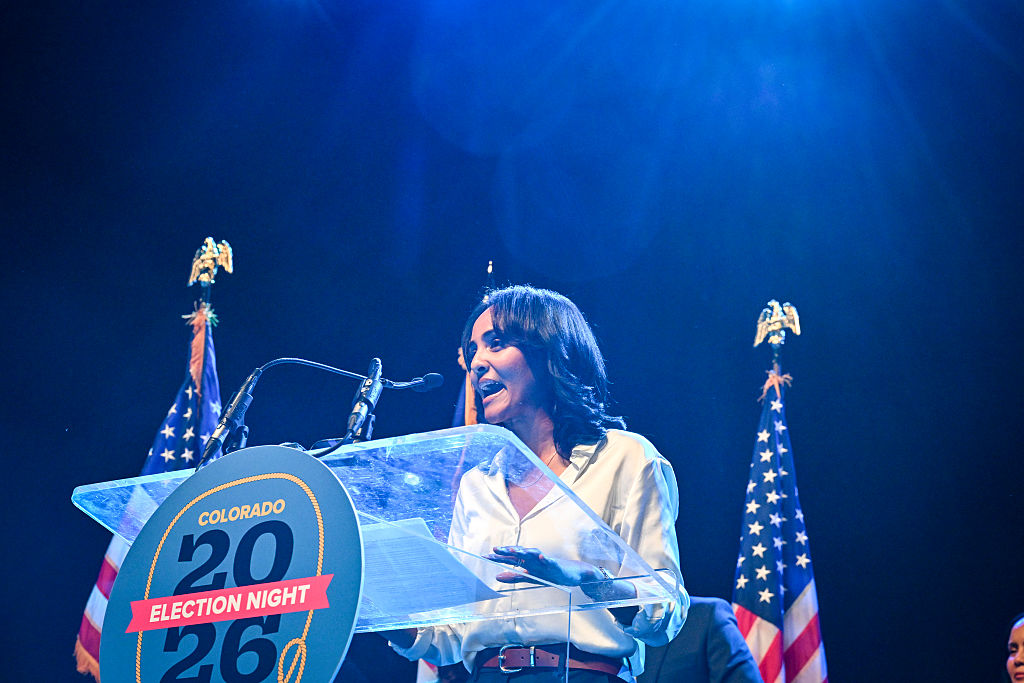 Rep.-elect Melat Kiros during the Colorado Democrats’ Election Night watch party in Denver on Nov. 3, 2026. —Aaron Ontiveroz—The Denver Post/Getty Images
Democratic socialist Melat Kiros, a 29-year-old Ethiopian-born lawyer turned doctoral student, will become the first Black woman to represent Colorado in Congress, after she was elected to represent the state’s 1st district in the U.S. House. Kiros, who was born in Addis Ababa in May 1997, will also be the first Gen Z woman in Congress.
Also making history in the state is Amanda Gonzalez, who was elected the first Latina and first openly LGBT Colorado Secretary of State.
Florida’s first Black governor and first South Asian congresspersonRepublican Rep. Byron Donalds will be Florida’s first Black governor, after he was elected to succeed Ron DeSantis.
Democrat Pia Dandiya, a former school principal and the daughter of Indian immigrants, won the race to represent Florida’s 22nd district in the U.S. House and will become the state’s first South Asian congressperson.
Georgia’s first Black woman elected Secretary of State, first woman Attorney General, and first Black woman labor commissionerIn Georgia, Democrat Penny Brown Reynolds will be the state’s first Black woman elected Secretary of State (after Robyn Crittenden was briefly appointed to the role in 2018), Democrat Tanya Miller will be the state’s first female Attorney General, and Democrat Nikki Porcher will be the state’s first Black female Commissioner of Labor.
Meanwhile, Democrat Bentley Hudgins became the first trans and nonbinary person elected to Georgia’s state legislature.
Indiana’s first openly gay congressman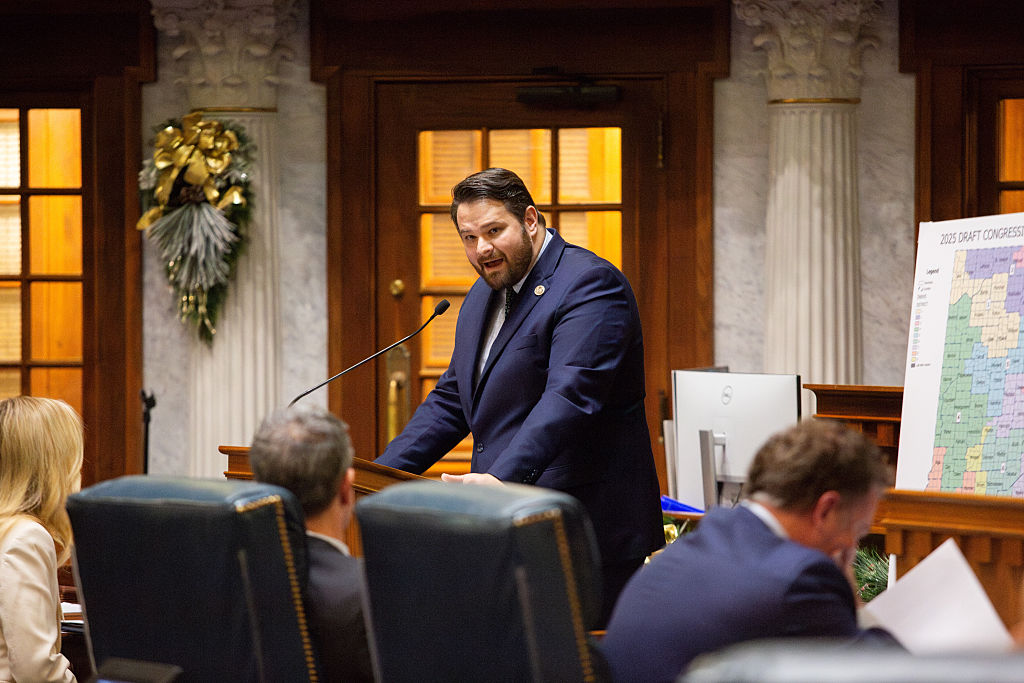 Rep.-elect J.D. Ford, then a state senator, speaks at the Indiana Statehouse in Indianapolis on Dec. 11, 2025. —Kaiti Sullivan—Bloomberg/Getty Images
Democratic state senator J.D. Ford will be Indiana’s first openly LGBT member of Congress after beating Republican incumbent Rep. Victoria Spartz, securing a seat Democrats haven’t held since 1992. Ford, who is gay, has been a strong advocate for LGBT rights and previously made history when, in 2018, he unseated a 13-year incumbent who campaigned against same-sex marriage to become the first openly gay member of the Indiana state legislature.
Iowa’s first Senator with a permanent disabilityDemocrat Josh Turek will be Iowa’s first U.S. Senator with a permanent disability, after the state lawmaker defeated GOP Rep. Ashley Hinson and became the first Democrat to win a U.S. Senate election in Iowa since 2008.
The 47-year-old Turek, who will replace outgoing Republican Sen. Joni Ernst, was born with spina bifida, a birth defect that he says stemmed from his father’s exposure to Agent Orange while on deployment to Vietnam. Turek pursued wheelchair basketball in college and competed professionally in Europe. He’s competed in four Paralympic Games and won gold in two.
“Iowa, we have done it—what they said was impossible,” Turek said in his victory speech Tuesday. “Together, Iowa, we have proven that the impossible was possible.”
Massachusetts’ first Asian American congressperson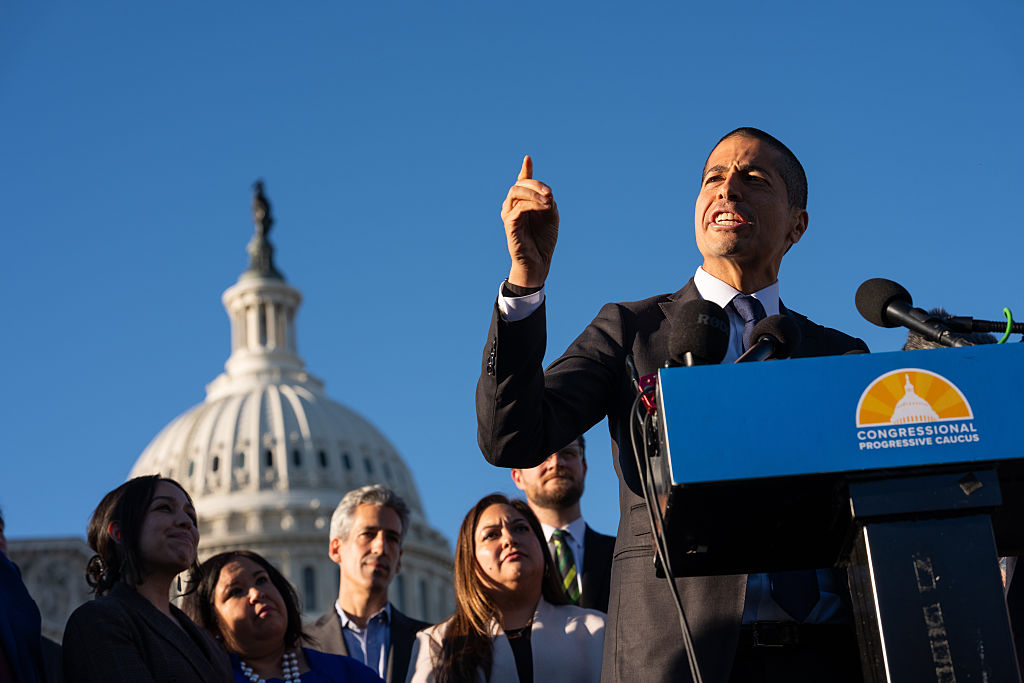 Rep.-Elect Dan Koh gives remarks alongside members of the Congressional Progressive Caucus during a new member orientation press conference outside the U.S. Capitol in Washington on Nov. 8, 2026. —Aaron Schwartz—Getty Images
Democrat Dan Koh, whose father is Korean and whose mother is Lebanese, won the race to represent Massachusetts’ 6th district in Congress, beating Republican Micah Quinney Jones. Koh’s win makes him the first Asian American elected to represent the state in the U.S. House. Koh served in the Biden Administration as White House Deputy Cabinet Secretary and was previously Chief of Staff to the U.S. Department of Labor.
Michigan’s first openly LGBT congressperson, first Native American congressperson, first openly gay Black state senator, and first transgender state representativeSeveral Democrats have made history in Michigan.
State senator Jeremy Moss will become the state’s first openly LGBT member of Congress after he was elected to represent Michigan’s 11th district. Moss defeated Republican Ethan Baker in the race to replace Democrat Haley Stevens, who lost to Abdul El-Sayed in the Democratic primary for U.S. Senator.
Jason Hoskins, who was elected to replace Moss in his state senate seat, will become the first openly gay Black member of the Michigan Senate.
Sean McCann, another state senator, will become the first Native American elected to Congress from Michigan. The Democrat, who discovered that he belonged to the federally recognized Citizen Potawatomi Nation just this year, beat Republican incumbent Rep. Bill Huizenga to represent Michigan’s 4th district.
And lastly, clinical spiritual care provider Joanna Whaley will become Michigan’s first elected transgender legislator after winning election to the state’s lower house.
Minnesota’s first woman governorDemocratic Sen. Amy Klobuchar will become Minnesota’s first female governor after she defeated Republican state House Speaker Lisa Demuth. Klobuchar, who will succeed Democratic Gov. Tim Walz, has broken the glass ceiling before: she was the first female Hennepin County attorney and the first woman elected to represent the state in the U.S. Senate, a seat she has held since 2007.
In her victory speech, Klobuchar thanked her supporters for her milestones and celebrated other ceilings broken, including the election of the country’s first Native American female senator, Lt. Gov. Peggy Flanagan, who will succeed retiring Democratic Sen. Tina Smith.
Nebraska’s first Latina congresspersonDemocrat Denise Powell beat Republican Brinker Harding to represent Nebraska’s 2nd district. Powell, a Democratic activist who co-founded the Women Who Run Nebraska political action committee to coach local women to run for office, is Hispanic and will become the state’s first Latina elected to Congress.
“We made history tonight,” Powell said in her victory speech Tuesday. “Not only did you help elect the first woman and first Latina to ever hold this seat, but you helped send a clear message to 1600 Pennsylvania Avenue,” she said, referring to the Trump White House.
Nevada’s first Latina congressperson, first Black governor, and first Black woman statewide officialTeresa Benitez-Thompson is the first Latina elected to the U.S. House from Nevada. The Democratic former state assembly majority leader defeated Republican David Flippo, flipping the state’s 2nd district that’s been held by Republicans since its creation in the 1980s.
Nevada’s Democratic Attorney General Aaron Ford will also make history as the state’s first Black governor, after he defeated Republican Gov. Joe Lombardo. He will join other historic Black governors-elect, Keisha Lance Bottoms in Georgia and Byron Donalds in Florida.
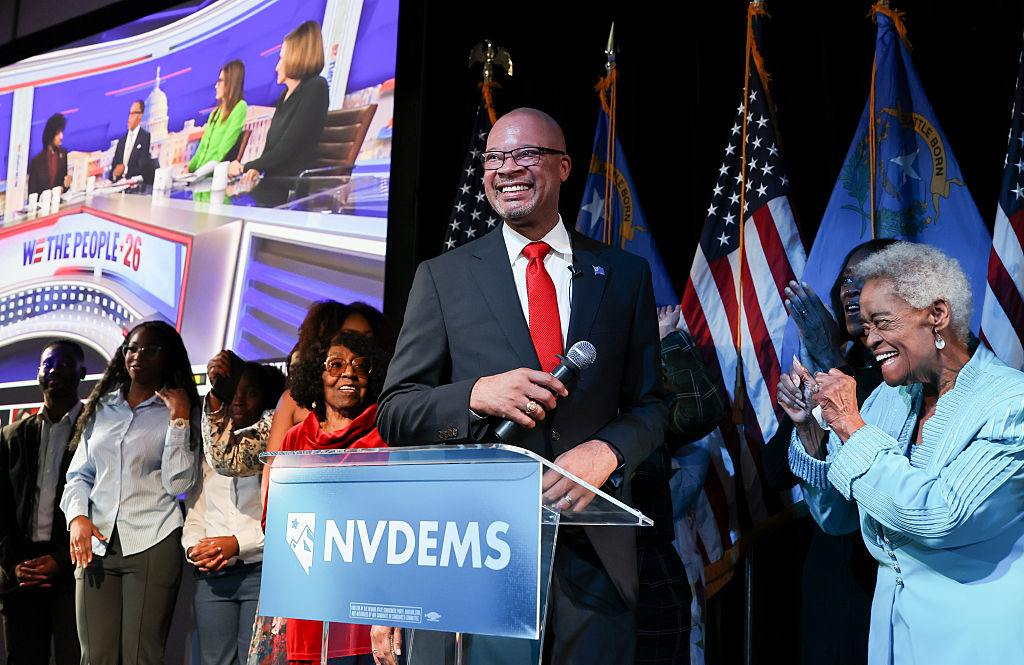 Nevada Gov.-elect Aaron D. Ford at the Nevada Democratic Party’s election watch party in Las Vegas on Nov. 3, 2026. —Ethan Miller—Getty Images
Tya Mathis-Coleman, Nevada’s treasurer-elect, will also become the state’s first Black woman elected to statewide constitutional office.
New Jersey’s first Muslim congresspersonEgyptian American surgeon Adam Hamawy will become New Jersey’s first Muslim representative in Congress after the Democrat beat Republican Gregg Mele in the contest to represent the state’s 12th district. Hamawy, a former U.S. Army combat surgeon, will succeed retiring Democratic Rep. Bonnie Watson Coleman.
Hamawy volunteered for medical missions in the Gaza Strip in 2024 and 2025 and spoke throughout his campaign about what he witnessed there. In his victory speech, he alluded to Islamophobia in the U.S., saying, “I have never seen anti-Muslim hate as open and as loud and as accepted as it is today.”
New York’s first Native American congresswoman, first Muslim congressperson, first Palestinian American state senator, and first non-binary state assemblymembersDemocratic socialists won big in New York—and several made history, too. Claire Valdez, a New York assemblymember backed by popular New York City Mayor Zohran Mamdani, will head to Capitol Hill in January as the state's first Native American woman in Congress, after her election to represent the state’s 7th district. Valdez, a Latina and a citizen of the Ysleta del Sur Pueblo Nation, bested Republican Melvin Rivera in a race to succeed retiring Rep. Nydia Velázquez. Darializa Avila Chevalier, a community organizer who worked for Mamdani’s mayoral campaign, will be the first Muslim to represent New York in Congress, after she defeated Republican Jomo Williams to succeed Rep. Adriano Espaillat, whom Avila Chevalier beat in the Democratic primary, as representative of the state’s 13th district.
Another member of the Democratic Socialists of America, state senator-elect Aber Kawas, will become the first Palestinian American in the New York State Legislature. Kawas acknowledged the feat on social media, posting: “We made history.”
Meanwhile, social worker Illapa Sairitupac and attorney David Siffert jointly set a milestone in the State Assembly after they were elected as New York’s first two openly nonbinary state lawmakers.
Ohio’s first elected female governor Ohio Gov.-elect Amy Acton greets supporters at an Election Night watch party in Columbus on Nov. 3, 2026. —Jeff Swensen—Getty Images
Dr. Amy Acton, a Democrat who previously served as the director of Ohio’s health department at the height of the COVID-19 pandemic, defeated Trump-backed Republican Vivek Ramaswamy in the race to become Ohio’s next governor. While Nancy Hollister served as Ohio’s first female governor for 11 days from 1998 to 1999, Hollister assumed the post through succession after Gov. George Voinovich resigned following his election to the U.S. Senate. Acton, therefore, is the first woman Ohio elected to be governor.
Rhode Island’s first openly LGBT Attorney GeneralDemocrat Kim Ahern, a former state prosecutor, defeated Republican Alan Gordon in the race to become Rhode Island’s next Attorney General. Ahern pointed to the historic nature of her success, including becoming the state’s first openly LGBT Attorney General and first Democratic woman in the role: “I am especially proud we made history tonight. It was the first time in our state’s history women will hold a majority of our general offices. I am honored to be part of that milestone,” she said in her victory speech.
Tennessee’s first woman governorRepublican Sen. Marsha Blackburn was elected Tennessee’s first female governor, beating Democratic candidate Jerri Green and several independents. When she takes office next year, Blackburn, who will succeed term-limited Republican Gov. Bill Lee, will also become Tennessee’s oldest governor at 74, taking the record from Republican Alfred Alexander Taylor, who was 72 when he took office in 1921.
Texas’ first Latina governor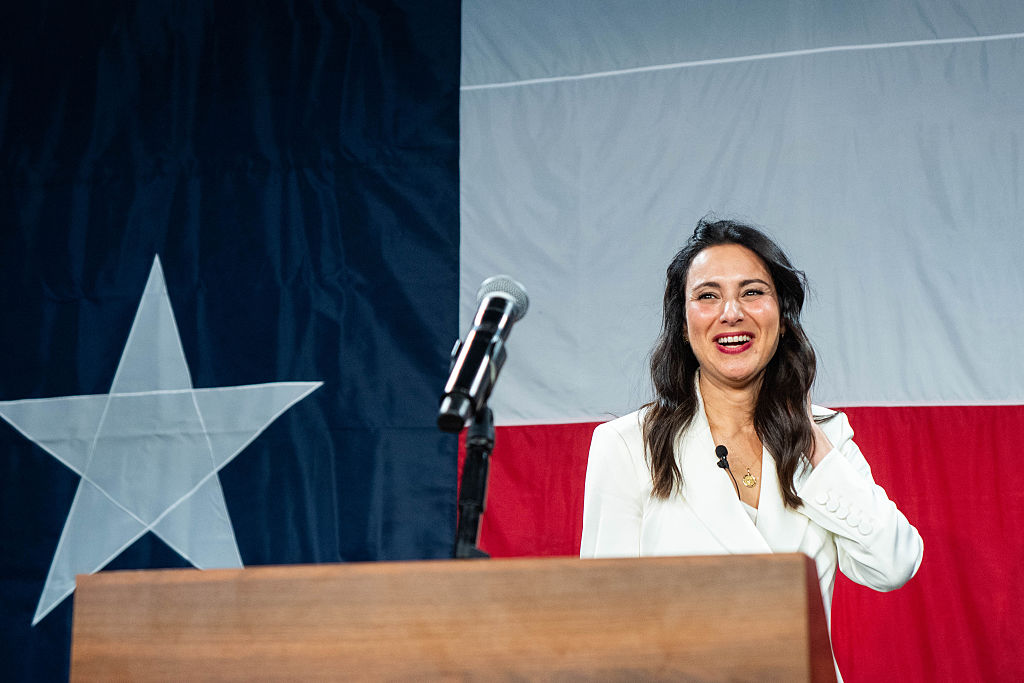 Texas Gov.-elect Gina Hinojosa speaks at her Election Night watch party in Austin on Nov. 3, 2026. —Mikala Compton—The Austin American-Statesman/Getty Images
Democrat Gina Hinojosa was elected as the new governor of Texas, becoming the first Hispanic person elected to the office in the state's history. Hinojosa is the first Democrat elected to the state’s governor’s mansion in more than three decades.
“I can’t help but think of my grandmother who used to tell me, ‘No te dejes.’ ‘Know your worth, and fight for it,’” Hinojosa said in her victory speech. “A lot of Latinas in Texas grew up hearing those same words from their own mothers and abuelas. This year, we lived them, and we changed this state.”
Washington’s first transgender state lawmakerJaelynn Scott, a member of the Democratic Socialists of America, will be the first openly transgender person to serve in Washington's Legislature. Scott, the executive director of the Lavender Rights Project, a Black trans advocacy organization, told nonprofit newsroom The 19th on Tuesday that her win felt “pretty surreal.”
“The fact is, people that look like me and have my identity in 2026 are used to being under attack — not leading,” she said. “I think it was because of what’s happening to us, and really maybe even a bit of fear about what might happen to me and my community, that inspired me to run. I never thought we would get this far.”
Wisconsin’s first Black governor, first Latina and first Hmong statewide officials, and first transgender state legislatorDemocrat David Crowley was elected Wisconsin’s first Black governor, after defeating Republican Tom Tiffany in the race to replace Democratic Gov. Tony Evers, who chose not to run for reelection.
Other Democratic candidates also made history in Wisconsin. JoCasta Zamarripa became the first Latina elected to statewide office as Wisconsin’s Secretary of State. Yee Leng Xiong, who was elected as state treasurer, will become Wisconsin’s first Hmong statewide elected official. And Dina Nina Martinez-Rutherford, a former food-service worker who beat Republican Nina Chat in a race to represent the state assembly’s 76th district, will become the first transgender woman in the Wisconsin state legislature.
“I think about when I was a kid, had I seen people that were trans doing things like being in government and being on television and living life,” Martinez-Rutherford, 56, told the Capital Times. “I hope that it gives kids or families of trans people hope that they can live to be adults and that their children are going to be safe because they have somebody representing them.”
Categories: ENTERTAINMENT RSS Streams