

LIFE Magazine

Breaking news and analysis from TIME.com. Politics, world news, photos, video, tech reviews, health, science and entertainment news.
URL: https://time.com/
Updated: 1 hour 6 min ago
Why Young Indians Are Fearful About the Future of the World’s Largest Democracy
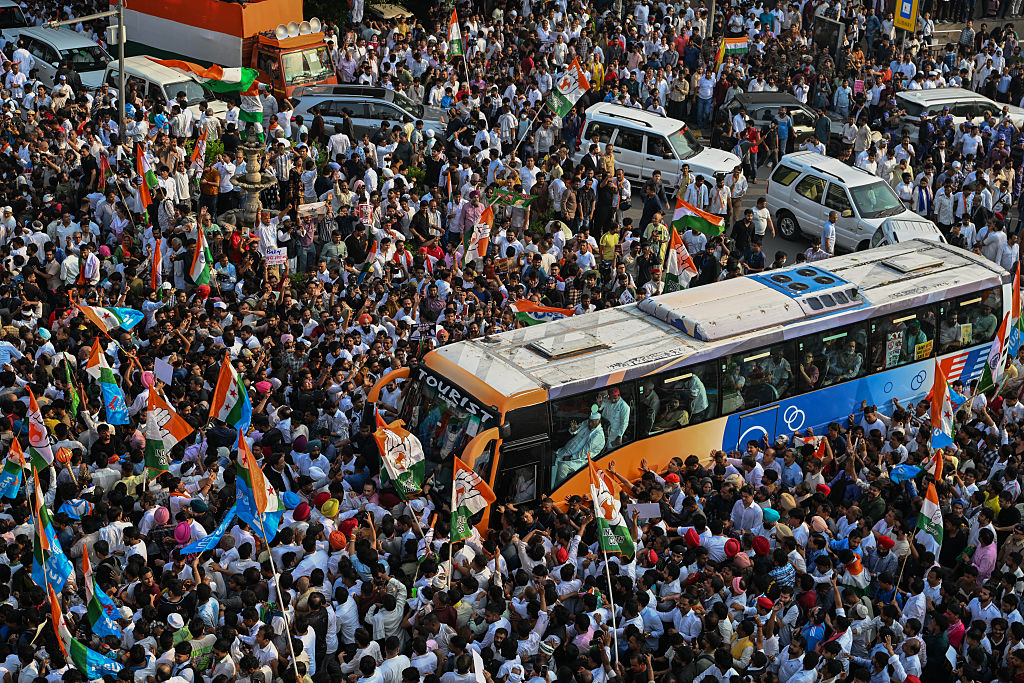 Protesters gather around a bus carrying Leader of the Opposition Rahul Gandhi during a demonstration on October 12, 2026 in New Delhi, India. —Ritesh Shukla—Getty Images
Demonstrations have swept across India in recent weeks, fueled by anger over what protesters say is a politically motivated purge of electoral rolls.
The protests were sparked by the removal of some 130 million names from the rolls by election authorities, who have defended the process, saying the exercise was intended to weed out ineligible voters.
But critics of the process, known as the Special Intensive Revision, said it was designed to bolster Prime Minister Narendra Modi’s Bharatiya Janata Party (BJP). They have demanded the resignation of the chief election commissioner, Gyanesh Kumar.
The demonstrations have been met with a heavy-handed response from Indian authorities, who locked down the capital, New Delhi, and detained leaders of the burgeoning Cockroach Janta Party (CJP), a youth-led movement that emerged earlier this year. An Indian court on Monday extended the detention of two Cockroach movement leaders, Ashutosh Ranka and Saurav Das.
The movement proved itself a powerful force in Indian politics this summer when it successfully campaigned for the removal of Education Minister Dharmendra Pradhan, who resigned on July 25.
To discuss the protests and what they mean, TIME spoke with Mukul Kesavan, a historian, novelist, and one of India’s best-known writers.
This interview has been condensed and edited for clarity.
Q: What are these protests actually about? Are they a natural progression from the Cockroach movement’s earlier protests, or something different?
MK: It’s related to the Cockroach movement (CJP) sit-in at Jantar Mantar [a traditional site of protest in the Indian capital] that led to the resignation of the education minister, in that the sit-in created a space for dissent by making Modi’s government back down. But [the Oct. 12 march] was distinct because it was organized by the Congress Party along with other conventional political parties. The CJP had no hand in organizing it, though one of its progressive/left stars, Neha Bora, participated in the march to the Supreme Court. It was also about a distinct issue: the Election Commission’s fiddling with voter rolls.
Q: Police detained the movement’s leaders before the October 10 rally, then detained two of them again at Jantar Mantar days later. What does that tell you about how the government sees this movement?
MK: There has been a reversal of the government’s attitude towards the CJP. At Jantar Mantar 1.0, the government underestimated the cockroaches, thinking it was a sit-in that would peter out. They were ambushed by the massive turnout of the young on July 20. The lesson the government learned from the police violence that discredited it was that it couldn’t afford to let the cockroaches occupy a space where massed citizens confronted the police for phone cameras to record. We’re seeing a strategy of pre-emptive detention to head off that possibility.
Q: India’s elections have long been a source of national pride. Has this episode damaged that image, at home or abroad?
MK: India’s elections were a bit iffy until a man called T.N. Seshan became chief election commissioner in the early 1990s. He was an awkward egomaniac who took his office seriously enough to clean up the whole election process. The Election Commission became a three-member body that was more or less impartial till the Modi government passed a law that gave the government the majority in the three-member panel that appoints the election commissioners. Gyanesh Kumar has been grotesquely partisan and the Special Intensive Revision has so obviously tried to shape the electoral roll to favor the BJP that the institution has been publicly discredited. India begins to resemble electoral autocracies elsewhere like Turkey.
Q: What do these protests tell you about Modi’s position?
MK: It’s the conventional thing to say, but it’s palpable that Modi’s aura of menace and authority has dissipated. The mockery and rudeness of young cockroaches, especially the young women who crowded into Jantar Mantar, did something that solemn ideological opposition had failed to do: it made him seem ridiculous, old and out of touch. I don’t know if the protests tell us anything about his electoral reach: we’ll have to wait for an election to find out. Opposition parties have to find a way of turning this fizz into votes.
Q: Modi has now been in power for 12 years. What are his real achievements? What will historians credit him with?
MK: Some achievements in infrastructure: road building, airports, etc. The kind of things authoritarians do well. It’s hard to know what the economic growth figures mean in terms of general wellbeing. Geopolitically, his time in office has been a disaster: India is on bad terms with all its neighbors, in denial about China and in the doghouse with Trump. It might be more useful to talk about how he has degraded the republic’s institutions—the press, the courts, the election commission—than his achievements. His greatest "achievement" has been to normalize the rhetoric of Hindu supremacy.
Q: India has one of the largest young populations in the world, yet the quality of its education and the prospects for its young people are grim. How does the situation compare to other places where young people are protesting?
MK: With the possible exception of Sri Lanka, all South Asian countries, including the ones that have seen youthful insurrections in recent times like Nepal, Bangladesh and India, have school and university systems that are generally poor, with a few exceptions: elite institutions. This would be bad in itself, but the success of China in improving its educational system at every level makes our failure demoralizing.
Categories: ENTERTAINMENT RSS Streams
Trump Open to ‘Denuclearization’ Summit with Putin and Xi
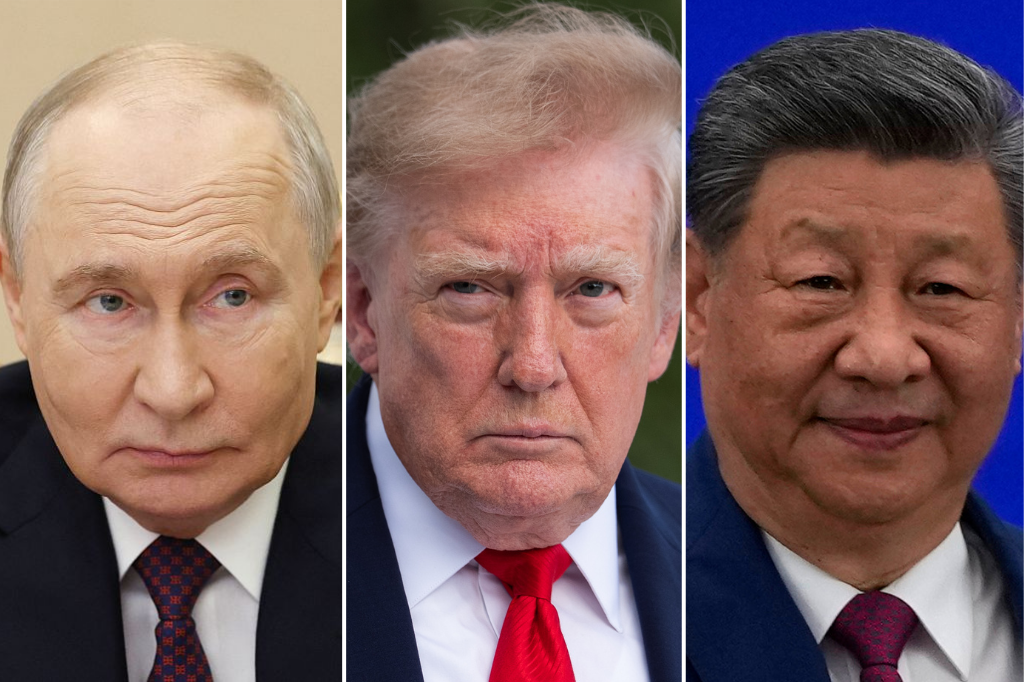 Russian President Vladimir Putin, U.S. President Donald Trump, and Chinese President Xi Jinping. —Vyacheslav Prokofyev—Pool/AFP/Getty Images; Aaron Schwartz—Getty Images; Ng Han Guan—Pool/Getty Images
President Donald Trump said on Monday he wants to hold a trilateral summit with Russia’s President Vladimir Putin and Chinese leader Xi Jinping in China to discuss “denuclearization.”
Speaking to reporters at the White House, Trump said such a meeting, which would be the first time the three leaders met outside of a larger multi-leader gathering, would be a “very positive thing for the world.” The U.S. President added: “If they’d like to have it, I think it would be held in China.”
The three leaders are expected to attend the Asia-Pacific Economic Cooperation summit next month in Shenzhen, the southern Chinese tech hub.
Trump was responding to Putin’s reported proposal for a three-way meeting with Trump and Xi. The Wall Street Journal reported, citing unnamed sources familiar with discussions, that Putin suggested the idea to Trump in an Oct. 9 call, seeking the summit to potentially broker an end to the war Russia started in Ukraine more than four years ago, without having a Ukrainian representative at the table.
Kremlin spokesperson Dmitry Peskov confirmed to the Journal that discussions of a potential meeting were underway, and U.S. Secretary of State Marco Rubio also suggested publicly that talks about a meeting were happening.
Trump, however, said that a trilateral summit would focus less on Ukraine: “We would have it to talk about nuclear weapons and denuclearization.”
Since his first presidential term, Trump has mused about scaling back the three countries’ defense spending. In a 2018 social media post, Trump said that he was “certain that, at some time in the future, President Xi and I, together with President Putin of Russia, will start talking about a meaningful halt to what has become a major and uncontrollable Arms Race.” He’s also made clear a goal to “de-nuke the world.”
A possible summit of the 3 biggest nuclear powersAccording to the Stockholm International Peace Research Institute (SIPRI), of the estimated 12,187 nuclear warheads in the global inventory as of January 2026, about 9,745 were in military stockpiles for potential use. Of these, Russia has the world’s largest, with the U.S. a close second—together making up 83% of the global stockpile.
China is third with more than 600 nuclear warheads, representing only 6% of the global stockpile, though SIPRI notes Beijing is “expanding its nuclear arsenal faster than any other country.”
The research institute says Russian and U.S. deployments of new nuclear warheads “are likely to rise in the years ahead,” with Moscow’s increase mainly due to military modernization allowing missiles to carry more warheads. Washington’s increase, on the other hand, “could happen as a result of more warheads being deployed to existing launchers, empty launchers being reactivated and new non-strategic nuclear weapons being added to the arsenal.”
Future nuclear proliferation in the U.S. and Russia is also uncertain after the bilateral Treaty on Measures for the Further Reduction and Limitation of Strategic Offensive Arms (New START) expired in February this year. That treaty placed verifiable limits on all Russian and U.S. deployed intercontinental-range nuclear weapons.
“The whole thing is a shame, because I’d love to denuclearize if possible,” Trump told Newsmax on Oct. 15.
In the interview, Trump said the U.S. was discussing denuclearization with Russia and China, but he added that Beijing “was probably less inclined.” During his first term, amid negotiations to extend the New START pact, Trump tried—and failed—to bring China into nuclear arms reduction talks. The U.S. is trying to bring China into the fold again, but Beijing has rejected past U.S. efforts, arguing that the U.S. and Russia must first reduce their larger arsenals.
A possible summit on Ukraine, without UkrainePutin’s suggestion of a trilateral summit on Ukraine would leave out a key player in the ongoing war: Ukraine, which unsurprisingly rejected the idea.
“A trilateral meeting between the leaders of Ukraine, the U.S., and Russia could help end the war sooner,” Ukraine’s foreign minister Andrii Sybiha posted Monday on X. “A trilateral meeting between the leaders of Russia, China, and the U.S. would do only the opposite: encourage Putin to continue this war.”
Speaking to reporters Monday, Peskov, the Kremlin spokesperson, said a final peace deal would obviously involve Ukraine: “Of course, a final settlement is impossible without the participation of someone in Kyiv who is prepared to take responsibility.”
But the proposal comes as Russia increasingly appears to be in Trump’s favor. Trump unveiled a diesel deal with Russia earlier this month in an attempt to lower fuel prices, and he also stopped implementing scheduled sanctions on Russia—moves that his allies have criticized. Meanwhile, Trump has pushed Kyiv to stop striking Russian refineries, one of its advantages in the war. He’s also blamed Ukrainian President Volodymyr Zelensky for rising diesel prices and has called on Ukrainians to replace him.
Categories: ENTERTAINMENT RSS Streams
Europe Braces for a Russian Winter
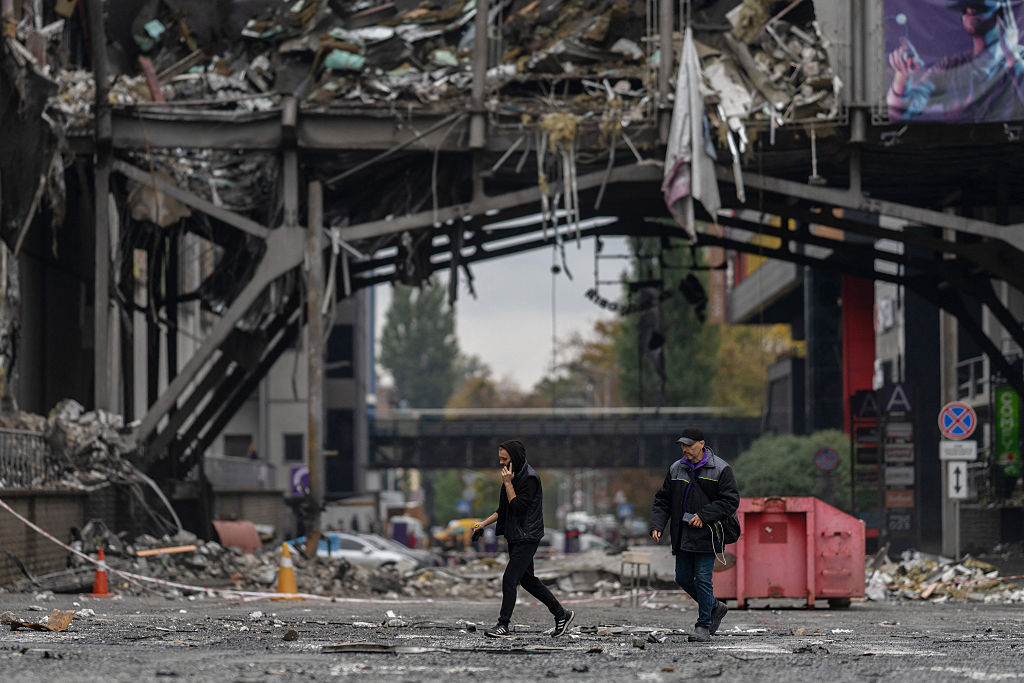 People walk in front of a damaged shopping mall following an air attack in Kyiv on October 19, 2026, amid the Russian invasion of Ukraine. —Oleksii Filippov-AFP-Getty Images
In the fifth year of their war on Ukraine, Russian forces are making little headway on the battlefield. And Ukraine has used drones to bring the war to cities across Russia, including Moscow. That is bad news for President Vladimir Putin of Russia, whose personal standing is tied directly to this war.
Putin is now determined to escalate, not just against Ukraine but also against the Europeans who have done so much to keep Kyiv in the fight.
He sees opportunities ahead. The Ukrainians are running low on Patriot interceptors and other air defenses, giving Russian missiles and drones a better shot at more effectively striking targets across Ukraine, including the infrastructure needed to keep the lights and heat on as winter approaches.
Putin also knows that 10 European Union member states will hold elections in 2027. He hopes that by waging hybrid warfare—disruptive sabotage attacks on E.U. and NATO members—he can turn European voters and some of their leaders against continued support for Kyiv.
European officials are bracing for three forms of Russian aggression. They have already seen a substantial number of Russian drones stray into NATO airspace, a byproduct of their growing use in the war and of the technologies both Russian and Ukrainian forces use to jam navigation systems.
The Europeans also see deliberate drone incursions, sabotage strikes such as the foiled Aug. 4 attack on a Ukrainian cargo plane at Leipzig airport, and even assassination plots. These operations serve several purposes: to test NATO responses, disrupt the supply of weapons and equipment to Ukraine forces, and raise the perception of rising costs for Europe’s continued support for Kyiv.
Finally, there is a low-risk possibility that Moscow might try to destabilize NATO countries such as Estonia and Latvia by mobilizing ethnic Russians within their borders and deploying the “little green men” (Russian troops without uniforms and identifying insignia) used to seize Crimea in 2014. Such an operation would test NATO’s will to defend its borders.
NATO officials are well aware they must prepare for Russian provocations that fall short of forcing alliance members to invoke Article 5, the alliance’s collective defense provision. European officials are developing a new National Security Strategy with an “emergency protocol” under which the European Commission can bring together heads of state to respond quickly to Russian aggression.
Retaliatory steps could include significant new sanctions and the deployment of European troops, weapons, and military hardware much closer to Russia’s borders. Europeans also control more than $225 billion in frozen Russian assets that could be seized.
The hope is that clearer, better coordinated European plans for response will make Putin more careful about actions that could precipitate a crisis by inflicting major economic damage or killing European civilians, even inadvertently. The message is blunt: Europe is united, prepared to respond and committed to Ukraine. Further escalation won’t change the European position.
European leaders aren’t just managing Putin’s expectations. They are also demonstrating to President Donald Trump that they are working to handle threats from Russia without relying on NATO—and therefore American leadership and taxpayer dollars. That said, they are presenting this National Security Strategy as a complement, not an alternative, to NATO. They know a credible response from the alliance remains essential to deterring Putin’s most aggressive plans.
European officials must act fast. They hope not only to help Kyiv weather Russian attacks in the coming winter, but also to better protect their own physical and cyber infrastructure. They also need to improve intelligence gathering and sharing, which is critical to responding swiftly and forcefully to new Russian moves. And they know they must have those preparations in place by the end of this year.
Categories: ENTERTAINMENT RSS Streams
Hepatitis B Cases Could Surge Under New Vaccine Guidelines, Study Finds
 —sefa ozel—Getty Images
Hepatitis B can be a silent killer. It can pass from mother to child during birth and can spread through contact with infected blood or semen. Among babies infected before they turn 1, up to 90% develop a chronic, potentially lifelong infection, for which there are treatments but no cure. People may not even know they have the virus until their liver fails or they develop cancer, years later. Early-in-life hepatitis B infections, left untreated, lead to a 1 in 4 lifetime chance of developing liver cancer.
In the U.S., hepatitis B vaccination became routinely recommended for all infants in 1991; later guidance specified that the first dose should happen within 24 hours of birth. However, in Dec. 2025, the U.S. Centers for Disease Control and Prevention (CDC) under the Trump Administration moved to cease recommending this practice for babies born to mothers who test negative, instead advising a shared decision-making model where parents and clinicians decide together what is medically appropriate: a dose shortly after birth, or a first dose "no earlier than 2 months of age." (For babies born to mothers who test positive or whose status is unknown, the CDC continues to recommend a dose shortly after birth.)
A new study, published today in Annals of Internal Medicine, uses computer modeling to simulate the hepatitis B infection status of an entire year’s worth of children born in the U.S. under the new recommendations over their first 20 years of life. The researchers find that if only about 26% of children are vaccinated—an estimate of what would occur under shared decision-making—chronic hepatitis B cases would rise by 225%.
When should kids get the first dose of hepatitis B vaccine?The American Association of Pediatrics continues to recommend vaccination at birth against hepatitis B for all infants, and 15 states have sued the Trump Administration over vaccination schedule changes.
“It's been challenged in many states and by professional societies, but we wanted to add some evidence to the conversation about what the potential impact of those changes could be,” says Dr. Amir Mohareb, an infectious-disease researcher at Harvard Medical School and Massachusetts General Hospital who is an author of the new study.
The simulation modeled how many of 3.6 million children, born the same year in the U.S., would develop hepatitis B under a number of scenarios, including if the former CDC recommendations continued to be followed, if the initial dose (also called a “birth dose”) was delayed, and if a shared decision-making scenario was employed.
The model suggests that if the first dose is delayed until 2 months old, and only 75% of infants get it, then there would be a 19% increase in chronic cases compared to if every child received their first dose at birth. With a 26% vaccination rate at 2 months, the number climbed to 225%.
This study modeled only at a single year of births, notes Mahoreb. “Imagine that happening year after year after year after year. That could quickly become thousands and thousands of new infections, and even a small number of new infections could result in lifelong chronic infection that could be detrimental to families, lead to more cases of cancer, and [become] costly to the health care system,” Mohareb says.
Two other recent modeling studies have looked at the impacts of changing hepatitis B vaccine recommendations. One found that if vaccination no longer occurred at birth, a substantial increase in screening pregnant women for the virus would be necessary to keep infection numbers in infants down. Another, looking at the economic ramifications, found that even if every child eventually received the vaccine, delaying the first dose by 2 months yielded an additional $16.4 million in health care spending on new infections.
“All three of these studies complement each other, in a good way, and provide some modicum of evidence so that we don't need to risk doing a clinical trial or testing this on people,” Mahoreb says. “We have done those experiments.” Decades ago, he continues, clinical trials already proved the efficacy of the existing approach, “so that we would have the benefit now of advancing medical progress and not needing to reopen that question.”
Categories: ENTERTAINMENT RSS Streams
Midterm Ad Spending Has Surpassed $10B. Where Is the Money Coming From?
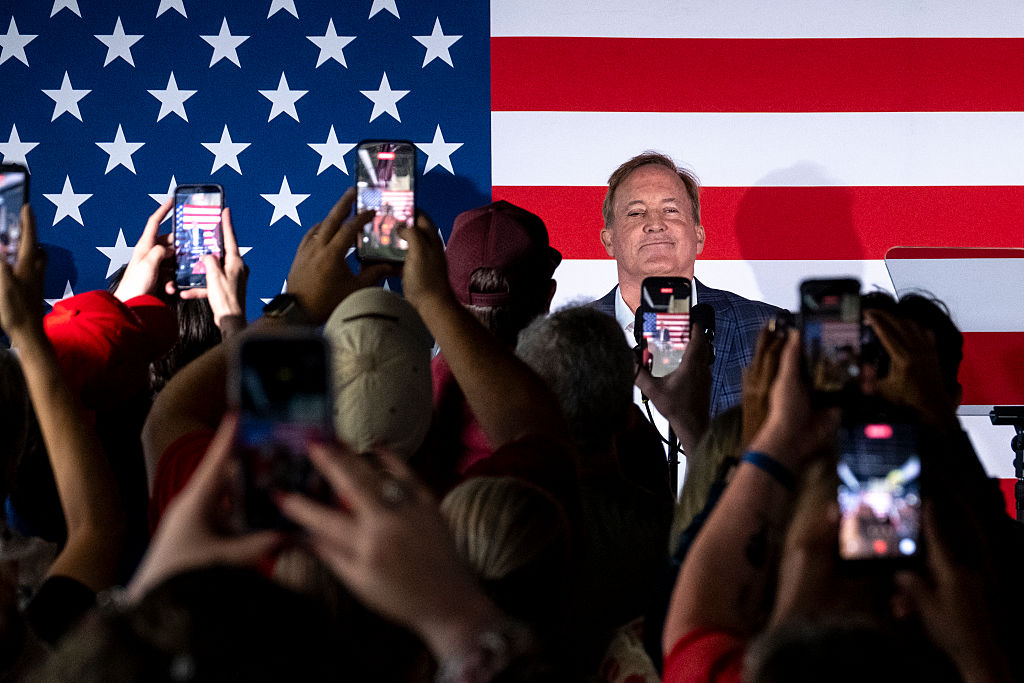 Texas Attorney General Ken Paxton, a Republican, poses at a rally for his Senate bid at Southern Roots Brewing Co. on Oct. 17, 2026, in Killeen, Texas. —Joel Angel Juarez—Getty Images
Political advertising spending for the midterm election cycle this year has reached a record high, surpassing $10 billion as of last week. It is projected to reach $11.6 billion by Election Day, according to the media tracking group AdImpact. The previous midterm spending record was set in 2022 at $8.9 billion, the organization reported, and the 2024 presidential cycle saw some $11.2 billion spent on ads.
The figure does not capture other campaign expenses, such as staffing, travel, and voter outreach. But it does measure one of the more influential political campaign tools: Research published in the American Political Science Review in 2021 estimated that a Senate candidate with a $2 million television advertising advantage over an opponent could gain about 10,000 votes—potentially enough to tip a close race.
Read More: Ohio May Be the Sleeper Senate Race of the Midterms
Spending the most, however, does not guarantee electoral success, experts tell TIME.
“It is important to keep in mind that having the most, and spending the most, does not guarantee you wins,” says Brendan Glavin, the director of insights at the research group OpenSecrets, which tracks money’s effect on U.S. politics, policy, and elections. “You need to have enough to compete, and you need to be able to get your name out, and people need to know who you are. But it’s not always about having the most.”
That has not deterred both parties from digging deep into their piggy banks this cycle—although their spending has been uneven.
Republicans have significantly outspent Democrats in Senate races, at $233 million to $121 million on broadcast television ads across nine of the tightest upper-chamber races last month, according to AdImpact. In races categorized as “toss-ups” by the Cook Political Report, AdImpact data attributes $947 million to Republicans and $625 million to Democrats, including ads that have not yet been aired. A large portion of the funding comes from a small number of deep-pocketed individuals bankrolling super PACs.
The spending gap is much narrower in House races, where Republicans have outspent Democrats by $14 million across 21 toss-up races.
Democratic Senate candidates, however, have substantially outraised their Republican opponents in many competitive races.
Here’s where some of that money has come from and a look at how it’s being spent.
Texas Senate race: $500 millionTexas is one of the most closely watched Senate races. October polling shows that James Talarico has the chance to become the state’s first Democratic Senator since 1993. A win in the state would deal a critical blow to Republicans’ grip on the upper chamber of Congress. He’s at 51% against Republican Ken Paxton according to CBS/YouGov polling from Oct. 8-16.
Combined ad spending and airtime reservations have surpassed $500 million, according to AdImpact, making it only the second non-presidential race to cross that threshold. The Ohio Senate race in 2024 reached $542.7 million.
Elon Musk, who has given $369 million to Republicans since the start of 2025 and is the biggest individual donor to federal elections this cycle, gave $158 million last month to Senate Leadership Fund, which transferred matching amounts to Texas PAC, the group supporting Paxton. Musk gave an additional $10 million to Lone Star Liberty PAC in August to support the candidate.
Glavin says that these donations, although not funneled to Paxton’s campaign directly, “essentially went directly into supporting Paxton” and appear to have “helped stabilize things” for him.
Talarico has outraised his opponent by roughly $50 million from July through September—but large donors and super PACs have given Paxton the edge when it comes to broadcast ads.
Ohio Senate race: $460 millionOver $450 million in combined ad spending has gone toward Ohio’s Senate race, according to AdImpact.
Republicans have spent nearly $270 million to support Jon Husted, while Democrats have spent over $180 million in support of Sherrod Brown. Ohio gives Democrats another chance to flip a Republican-held seat, with Husted leading by less than a point as of Sunday, according to an ActiVote poll.
Husted was appointed to replace Vice President JD Vance in 2025, meaning that the winner of this special election would need to win again in 2028 to serve a full six-year term.
Through September, Republicans spent $41 million more than Democrats in aired election ads, making it the second-largest GOP dollar advantage among nine identified battleground states, behind Texas, according to AdImpact.
Maine Senate race: $200 millionMaine is home to the most expensive Senate race per capita this cycle, with a combined ad spend of roughly $200 million.
In Maine, Democrats are vying to flip a red seat. Republican Sen. Susan Collins is seeking her sixth term, but she’s closely contested by logger and former Maine Senate President Troy Jackson.
Republicans have spent or committed almost $114 million on advertising since January, compared with almost $81 million for Democrats, according to AdImpact.
What are the donation limits for PACs and super PACs?The Federal Election Campaign Act sets limits for individual donations to congressional races.
The limit for an individual donation to a candidate’s campaign is $3,500 per election for the 2025-2026 election cycle. These caps are adjusted for inflation every two years.
A traditional political action committee (PAC) pools contributions to support or oppose candidates. Individuals may contribute up to $5,000 to a traditional federal PAC per year. The limit is higher for contributions to a national party committee, at $44,300 per committee per calendar year.
Super PACs, unlike traditional PACs, cannot donate directly to candidates’ campaigns or coordinate their advertising with those campaigns. Those restrictions are intended to prevent unlimited outside donations from becoming a way around limits on contributions to candidates.
There is no limit to how much an eligible person or entity can donate to a super PAC, as demonstrated by Musk's steep contributions in Texas.
Several other billionaires have also contributed to Republican super PACs: Shipping industry moguls Elizabeth and Richard Uihlein donated $138 million in the current election cycle, while Jeff Yass, who founded Susquehanna International Group, and his wife, Janine, contributed $110 million. The top donor to a Democratic super PAC is George Soros, who is linked to the entities responsible for contributing $102 million to Democracy PAC, which he founded in 2019.
Two court decisions in 2010 helped establish today’s super PAC system. The Supreme Court’s Citizens United ruling protected independent political spending by corporations and unions, while a subsequent federal appeals court ruling removed limits on individual contributions to groups making only independent expenditures.
Critics argue that the system gives wealthy donors disproportionate political influence and allows money to flow through nonprofits that conceal its original sources, using what’s referred to as “dark money.” Super PACs must disclose their donors, but those donors can include organizations that do not identify their own funders.
The legal rationale for allowing unlimited contributions rests on the premise that prohibiting individuals or entities from contributing directly to campaigns prevents corruption.
Categories: ENTERTAINMENT RSS Streams
Jalen Hurts Has Deep Vein Thrombosis and Blood Clots in His Lungs. Here’s What to Know
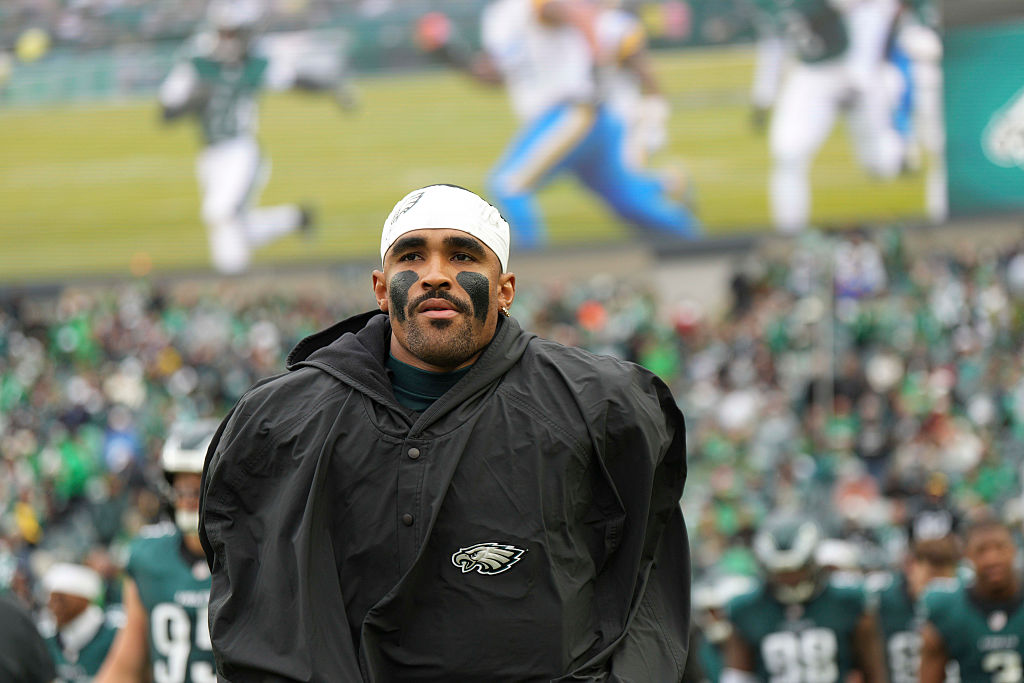 Philadelphia Eagles quarterback Jalen Hurts looks on during the game between the Los Angeles Rams and the Philadelphia Eagles on October 4, 2026 at Lincoln Financial Field in Philadelphia. —Icon Sportswire—Getty Images
Jalen Hurts is expected to miss the rest of the NFL season after doctors diagnosed blood clots in both lungs, ESPN and NFL Network reported.
The Philadelphia Eagles quarterback has deep vein thrombosis (DVT) and bilateral pulmonary emboli, according to an Oct. 19 statement from the team. He is clinically stable and has no significant functional limitations, they said, but needs blood thinners—and can’t participate in contact activities, including football, while taking them.
“Jalen’s prognosis is very good, and we expect a full recovery,” the statement said.
The news raises questions beyond football: How do you recognize a blood clot? What does treatment involve? And why can some people stop blood thinners after a few months while others take them for life? We asked doctors who aren’t involved in Hurts’ care what everyone should know.
How to recognize a possible blood clotDeep vein thrombosis, or DVT, occurs when a clot forms in a vein deep inside the body, often in the leg. Those veins carry blood back toward the heart. They’re different from superficial blood clots——Hurts’ original diagnosis—which form closer to the skin, explains Dr. Geoffrey Barnes, a cardiologist and vascular medicine specialist at University of Michigan Health.
The distinction matters because deep-vein clots are more likely to break loose and travel through the heart into the lungs. Once a clot lodges in an artery there, it causes a pulmonary embolism.
DVT often causes pain, swelling, and redness or a darker skin color. Patients commonly tell Barnes, “My entire calf and ankle are swollen.” One leg might look noticeably different from the other.
An injury can make those symptoms easier to dismiss. “If you’re worried that you have a DVT, it’s important that you get medical care quickly,” Barnes says. Seek a same-day evaluation through your doctor, urgent care, or an emergency department rather than waiting to see whether it goes away.
Unexplained shortness of breath, chest pain, coughing up blood, or fainting require emergency care because they can signal a pulmonary embolism. A dry cough without a cold, pain when taking a deep breath, or a racing heart can also be clues, says Dr. Stephan Moll, a hematologist and professor of medicine at the University of North Carolina who runs an Athletes and Blood Clots Clinic.
Some pulmonary embolisms cause only mild symptoms—or none at all. People can mistake the discomfort for bronchitis, pneumonia, or a strained muscle, Moll says.
Clots become more common with age. Other risk factors include surgery, injury, prolonged inactivity, cancer, certain inherited conditions, and estrogen-containing medications. But young, active people can develop them, too.
How doctors diagnose and treat blood clotsTo check for a leg clot, doctors usually use ultrasound. They move a handheld device over the skin to get pictures of the veins underneath, gently pressing as they go. A normal vein should flatten under that pressure.
With a clot, “you can’t squeeze it closed because that solid clot is in the way,” Barnes says.
Doctors typically use a specialized CT scan to look for clots in the lungs. Finding them in both lungs doesn’t, by itself, establish how sick someone is, Barnes says. Doctors also check oxygen levels, blood pressure, and whether the heart is struggling to pump blood through the lungs.
Pulmonary embolisms range from mild cases to medical emergencies, Moll emphasizes. Some people need treatment in the hospital, including medication that dissolves clots or a procedure to remove them. Many others can be treated with anticoagulants, commonly called blood thinners.
Blood thinners help keep clots from growing and prevent new ones from forming. “They do not dissolve blood clots,” Moll says. Your body gradually breaks down the existing clot, though some people are left with scar tissue.
Many people with DVT can take medication at home, Barnes says. Some people with lower-risk pulmonary embolisms can, too.
Treatment for DVT or pulmonary embolisms generally lasts at least three months. “For the first three months it’s uninterrupted blood thinners,” Moll says.
After that, doctors weigh the chance of another clot against the risk of bleeding from continued medication. What caused the clot helps guide that decision. Someone who developed one after surgery may be able to stop once treatment is complete and that temporary risk has passed. “But if this kind of came out of the blue,” Barnes says, longer-term treatment may make sense. Cancer, continued immobility, and certain clotting disorders can also affect the decision.
Having a scan that looks better doesn’t automatically mean it’s time to stop medication, Moll says. Doctors generally follow symptoms rather than ordering repeated scans to watch a clot disappear.
Even someone who stops daily medication may need a prevention plan for future surgery or another period of increased risk. “Risk factors vary, and the length of treatment varies, and the recovery varies,” Moll says.
What recovery looks likeA blood-clot diagnosis doesn’t necessarily mean you need to stay on the couch.
“I’m not asking them to go for a jog or run a marathon,” Barnes says. “But I want them to be up and walking around as much as they can tolerate,” gradually doing more every day.
Getting tackled is another matter. Blood thinners make bleeding harder to stop, so a collision or fall—especially one involving a head injury—can become much more dangerous. When it comes to contact sports like football, “I would not let an athlete play on blood thinners,” Moll says.
For some athletes who need long-term treatment, specialists may consider a carefully managed, intermittent medication schedule after the initial three months, Moll says. It isn’t suitable for everyone and requires expert oversight; patients shouldn’t skip doses to play sports. Ask your doctor which activities you can safely return to and when.
Keeping your legs moving can also help reduce the risk of future clots. On long flights, Barnes recommends getting up to walk every one to two hours. While you’re seated, pretend your big toe is a pen and trace the alphabet with it to get your ankle moving and help pump blood through your legs. “You can do that just sitting in your seat. Nobody knows,” he says. If you’ve recently had a clot, check with your doctor before flying.
Some people feel much better relatively quickly. Others experience lasting damage to the veins after DVT, which can leave blood struggling to flow back up the leg. That can result in what doctors call post-thrombotic syndrome: “chronic swelling, chronic pain, chronic leg heaviness,” Moll says. After a pulmonary embolisms, some people continue to have shortness of breath, chest discomfort, or fatigue, particularly if the clots haven’t fully cleared.
Depending on what’s causing the symptoms, treatment might include compression stockings for leg swelling, specialized rehabilitation, or a procedure to address damaged veins or lingering clots. Tell your doctor if those symptoms linger. “We have treatments that we can offer to try and make that better,” Barnes says.
Categories: ENTERTAINMENT RSS Streams
How the Protests in France Spiraled Out of Control
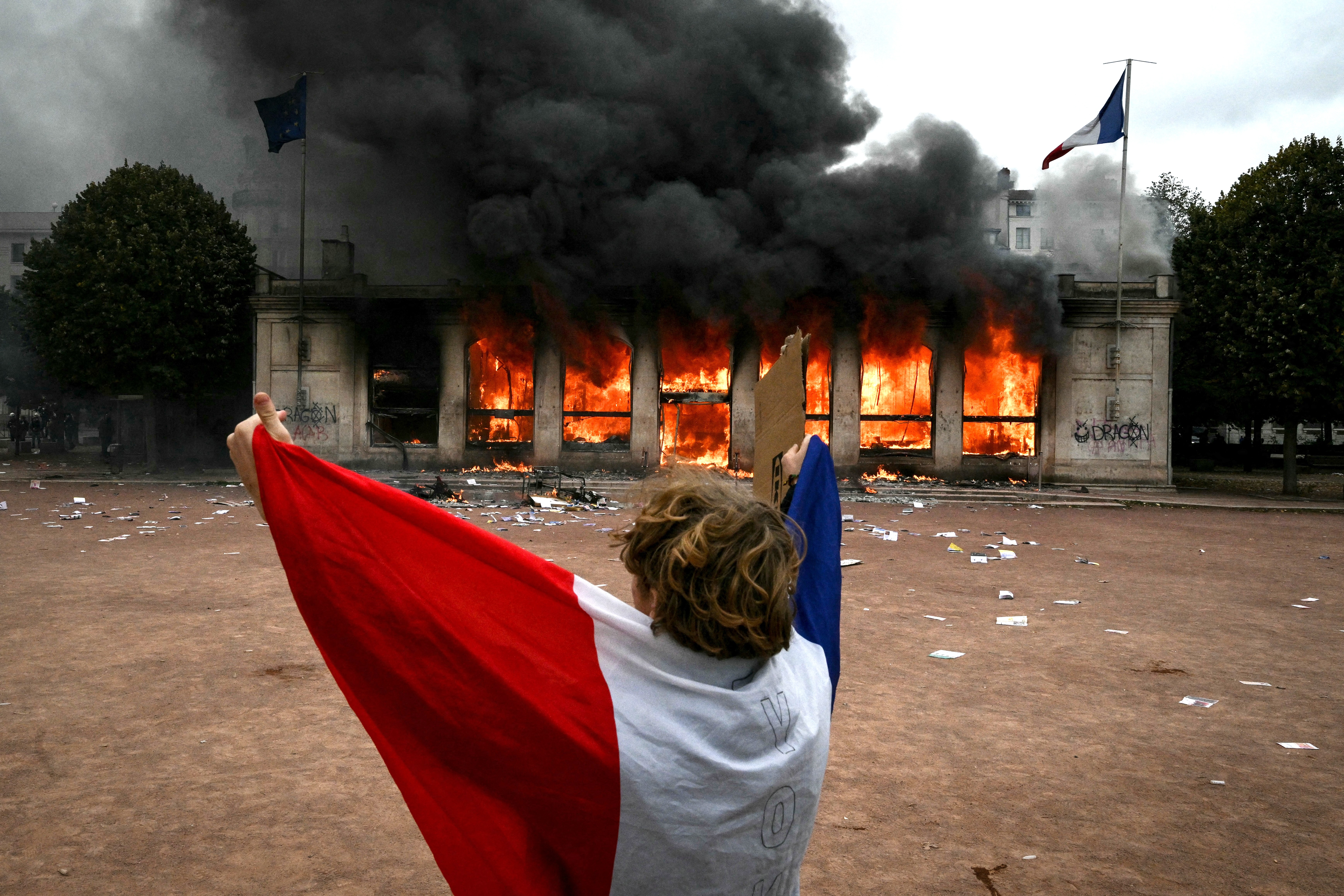 A protester wrapped in a French flag stands in front of Lyon's burning tourism office in southeastern France, on Oct. 17, 2026 —Jeff Pachoud—Getty Images
France’s Interior Minister Laurent Nuñez on Monday admitted that police “lost control” in some cities over the weekend as violent protests erupted across the country, while French President Emmanuel Macron called for a review of the police response to the rioting and looting.
Nuñez said there had been a "lack of anticipation" ahead of the demonstrations on Saturday and acknowledged that policing numbers had fallen short in some areas as hundreds of thousands took to the streets to protest over, what they say are, underfunded public services and rising cost-of-living pressures. The demonstrations followed weeks of student protests that had also seen some violence.
In the wake of the chaotic scenes, Nuñez offered his resignation to Macron because he "felt responsible” for how things unfolded. Macron refused to accept it, due to “the need for a continuous command of the police,” the Élysée Palace told TIME. Instead, Macron has called for the Interior Ministry to “take all necessary steps to ensure transparency over planning and intelligence failures” and to put an end to the barricades and looting.
As France aims to regain full control of its streets, French Prime Minister Sébastien Lecornu has extended local mayors the power to enforce “partial curfews,” in an effort to protect businesses and people. The French government has also vowed to create a fund to financially assist shops that were impacted by the riots.
The Interior Ministry reported that around 550,000 people had taken to the streets on Saturday. A French trade union put the number at over 800,000. Nuñez on Sunday said that more than 2,000 people had been arrested and over 600 police officers and firefighters injured. In Paris, at least 300 businesses were vandalised, Dominique Restino, the head of the Paris chamber of commerce, told BFM television. Alongside the violence in the capital, what started out as peaceful protests in Marseille and Lyon also turned violent as rioters descended. Authorities in Marseille on Monday imposed a temporary ban on public gatherings and demonstrations.
Various buildings and official monuments have been targeted across the country.
A historic town hall in the French city of Limoges was damaged in what appeared to be an arson attack on Saturday. One of the main tourist offices in the city of Lyon was set ablaze. In Bordeaux, the prefect's residence was attacked, according to local authorities.
Macron addressed the nation on Sunday, acknowledging the public’s “anger” and “shame” over the rioting that accompanied the demonstrations. “Those who looted will have to pay for the damage, and those who sought to bring down the Republic will be held accountable,” Macron vowed in a televised address.
Protests spread across FranceThroughout September, students across France blockaded schools and demonstrated against, what they say is, a poorly-funded high school system. The protests went nationwide on Oct. 6, when more than 250,000 people took to streets across with teachers, parents, and union activists joining marches.
The demonstrations have drawn comparisons to the May 1968 protests, which were initiated by a student movement and led to millions of workers striking and nearly toppled the government.
Over the weekend, further demonstrations were organized across the country, with some protesters seeking to revive the Yellow Vest movement of 2018, which emerged in response to planned increases in fuel taxes on diesel and gasoline.
In Paris, protesters on Saturday draped a yellow vest over the Marianne statue at the Place de la République. The website of the coordination group described the mobilization as a convergence of student protests and wider economic grievances, bringing together high school and university students, farmers, firefighters, workers, teachers, healthcare workers, climate activists, residents of working-class neighborhoods, and retirees.
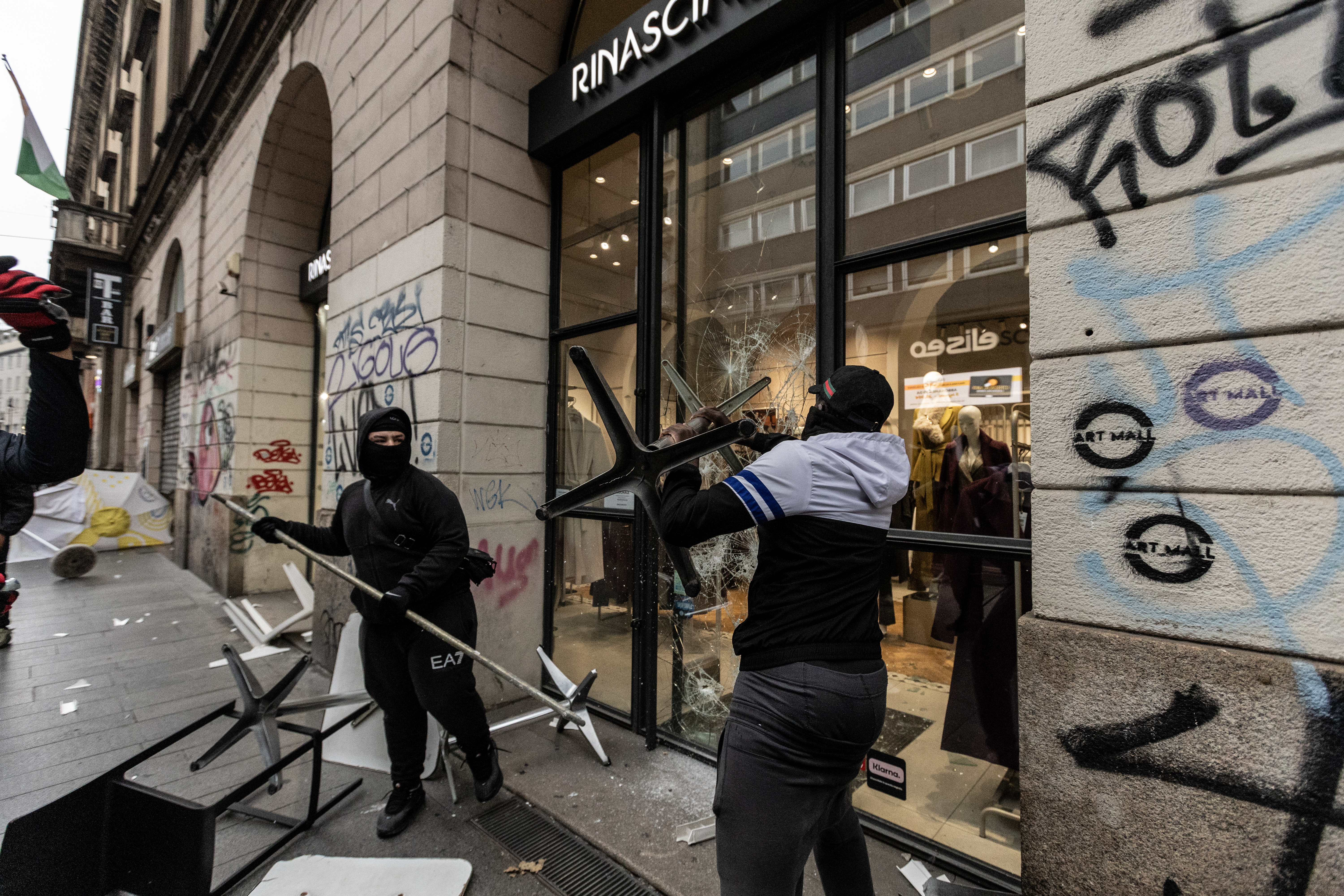 People vandalize a shop during protests in Milan, Italy, on Oct. 18, 2026. —Andrea Carrubba—Getty ImagesThousands demonstrate in other European cities
France was not alone in dealing with demonstrations over the weekend, as protesters also took to the streets in other European countries.
In Portugal, protesters marched in Lisbon, Porto, and Coimbra as they called for better pensions, improved public services, and affirmative government action to combat rising living costs.
In Milan, police clashed with protesters as some threw stones and looted shops during demonstrations against underfunded services and the rising cost of living. Italian Prime Minister Giorgia Meloni is holding an emergency meeting with security officials on Monday to assess the situation that unfolded. There were further clashes between police and protesters in Bologna and Turin.
Unrest also broke out in Brussels, Belgium, on Saturday afternoon, as antifascist activists took to the streets. The demonstrations turned violent, prompting police intervention amid reports of property damage.
Categories: ENTERTAINMENT RSS Streams
An Idaho ICE Raid Rounded Up Hundreds. The Fallout Could Change How ICE Operates
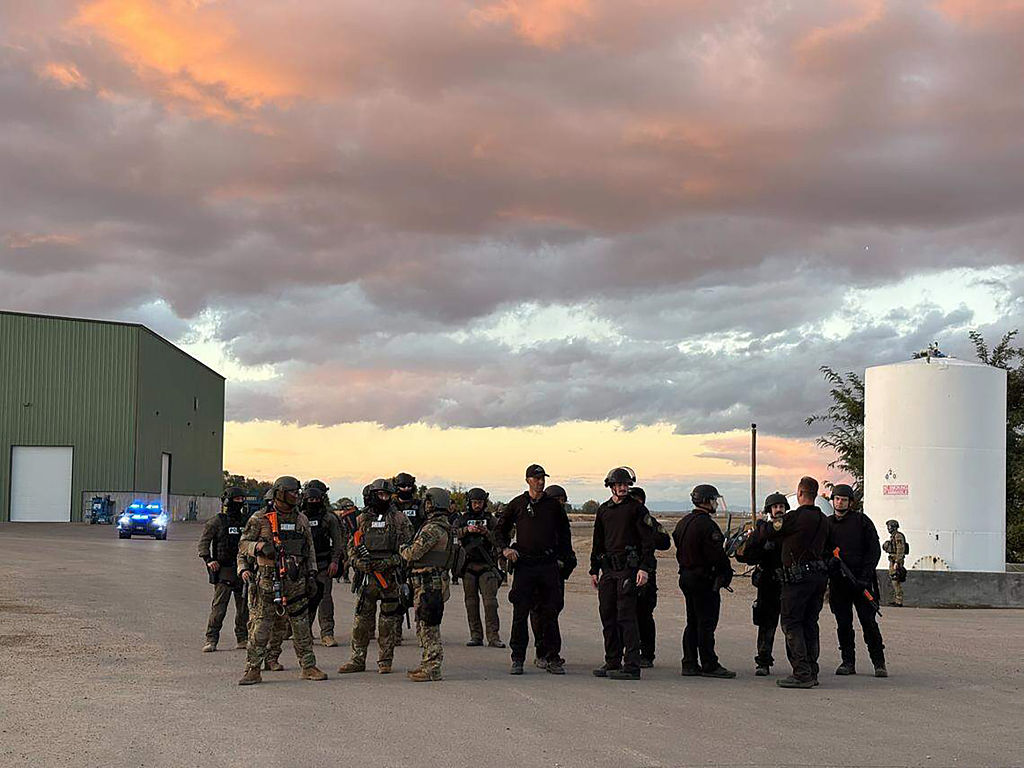 Agents stand at La Catedral Arena in Wilder, Idaho, in late October 2025 as part of an investigation into alleged illegal horse betting that involved multiple law enforcement agencies. —Sally Krutzig–Idaho Statesman/Tribune News Service via Getty Images
People first noticed the black helicopter in the sky.
It was a chilly Sunday afternoon a year ago at La Catedral Arena, a popular track for horse racing outside the Idaho town of Wilder. Hundreds had gathered at the arena for a festival celebrating horse racing and Mexican culture.
As the military-style helicopter hovered above them, attendees from the rural, predominantly Latino community, began to get nervous.
“Something is wrong,” Ivan Popoca, who attended the festival with his two kids, remembers thinking.
Within minutes, the festival grounds descended into chaos. Backed by armored trucks and snipers, more than 200 members of law enforcement stormed the grounds, some shot rubber bullets into the crowd and hurled flash-bang grenades into vehicles where people had fled to hide. Hundreds of people, including teens as young as 14, were detained and zip-tied.
When it was all over, federal authorities had arrested 105 people for alleged immigration violations. Yet on paper, this wasn’t an immigration raid at all. The only warrant for the Wilder raid was secured by the FBI. Its target: the owner of the track and four others for alleged unlicensed gambling.
Twelve months later, the Wilder raid is at the center of a court fight that could shape ICE operations around the country. Advocates argue that in Idaho, ICE unlawfully piggybacked on an FBI operation, rather than securing their own warrant, as they would be expected to do on this type of operation. A lawsuit brought forth by the ACLU argues that federal authorities violated the Fourth Amendment, which protects against unreasonable searches and seizures, by using an unrelated search warrant as a “cover to go fishing for immigration arrests.”
“That is not what a criminal search warrant execution looks like. That is what a massively violent
immigration raid looks like,” says Jenn Rolnick Borchetta, an ACLU attorney who helped bring the resulting lawsuit.
Trump Administration officials insist that the arrests made that day were lawful. “The facts haven’t changed: ICE helped dismantle an illegal horse-racing, animal fighting, and a gambling enterprise operation out of a property known as La Cathedral Arena in Wilder, Idaho,” a DHS spokesperson told TIME. Idaho Gov. Brad Little also defended the raid, saying in a statement at the time that it is “common practice” to detain others present while processing the scene.
For Wilder residents, the La Catedral raid remains an open wound that refuses to heal. Popoca still recalls with anger how he and his 16-year-old son were zip-tied for hours for no apparent reason.
The ACLU and some of the families involved in the case released a documentary online on Monday called Wild Raids in which they discuss the raid’s impact, and why the legal challenge matters beyond people in Wilder.
“Some community members don't even want to think about this anymore,” says Leo Morales, the executive director of the ACLU Idaho. “But there are also folks who are also realizing how critical it is to be able to push back, to organize and to demand fairness and justice.”
Recurring nightmaresJuana Rodriguez attended the festival with her three-year-old son. Despite both of them being U.S. citizens, they were zip-tied and detained for hours following the raid. Like many others who were detained, she described not being given access to food or water.
“For the longest time, my son begged me for food. He begged me for water,” Rodriguez says. She repeatedly asked the officers she could be untied so that she could feed and console her crying son, she says, but was rebuffed. “I wish I could have done more in the moment, but I couldn't.”
Detainees were eventually taken into a tent and questioned by ICE agents about their immigration status. Among the 105 people who were ultimately arrested, 75 are believed to have been deported to their home countries, according to local media, and 26 were released from ICE custody after their lawyers filed habeas corpus petitions. The whereabouts of the remaining four people are unclear. ICE did not provide an update on their case status.
The day after the raid, the Wilder School District reported absent rates soared, with 20% of students absent, according to The Idaho Statesman. More than half of the district’s student body is Hispanic or Latino.
A year later, Rodriguez says she is still scared to go to Latino cultural and other public events because of what happened at La Catedral. She also has nightmares about ICE officers taking her child away from her.
“I'm from here. My kids are from here,” she says. ”Why should I have to feel that? Like, I shouldn't.”
 A large group of protesters gather in October 2025 in Caldwell, Idaho, to protest an FBI and ICE raid in Wilder. —Darin Oswald–Idaho Statesman/Tribune News Service via Getty ImagesICE’s Growing Legal Fights
The ACLU filed a class-action complaint in February, charging that a variety of local, state and federal agencies violated the constitutional rights of those at the festival. Both sides are now waiting for a judge to rule on a motion by ICE and other agencies to dismiss, in which it argued that federal and state law enforcement are protected by qualified immunity, a longstanding legal doctrine when executing a federal warrant.
The Wilder case is one of multiple lawsuits the Trump Administration is fighting over its immigration enforcement operations. In Minnesota, none of the federal agents involved in the deaths of Renee Good and Alex Pretti have been criminally charged, but a string of civil lawsuits is beginning to emerge. Earlier this month, the family of Renee Good, who was killed last January by a federal agent during the immigration enforcement surge in Minnesota, filed a pair of civil lawsuits against the federal government, according to their legal representative. Marimar Martinez, a U.S. citizen who was shot by a Border Patrol agent during a confrontation on a Chicago street last year, has also filed a lawsuit against the federal government.
Anyone seeking to hold federal agents accountable must be prepared for a long wait, says Borchetta. A lawsuit against the federal government can’t even be filed unless it’s been six months since a complainant filed a claim for compensation and the issue remains unresolved.
“If a federal employee is driving their car negligently on the job and hits you with their car, you can bring a claim for them for that negligence,” Borchetta says. “It also applies where an ICE agent is mistreating you or causing you harm.”
But the law itself imposes many limitations on suing the federal government. Victims can seek compensatory damages for actual losses, but not punitive damages. And unlike state authorities who can be sued for civil rights violations in state courts, federal law enforcement authorities are generally shielded from such lawsuits based on legal precedents.
But Borchetta says the impact of the lawsuits can be bigger than any verdict. She argues that the ongoing Wilder case has already helped change ICE’s conduct as well as how local governments collaborate with them.
“While we don't yet have a decision from the court, we haven't seen more raids like this in Idaho,” she says. “The lawsuit itself exposes both the state and the federal actors to liability, and that can change behavior itself.”
Categories: ENTERTAINMENT RSS Streams
Trump Endorses Netanyahu Days Before Israeli Election as Iran War Tests Friendship
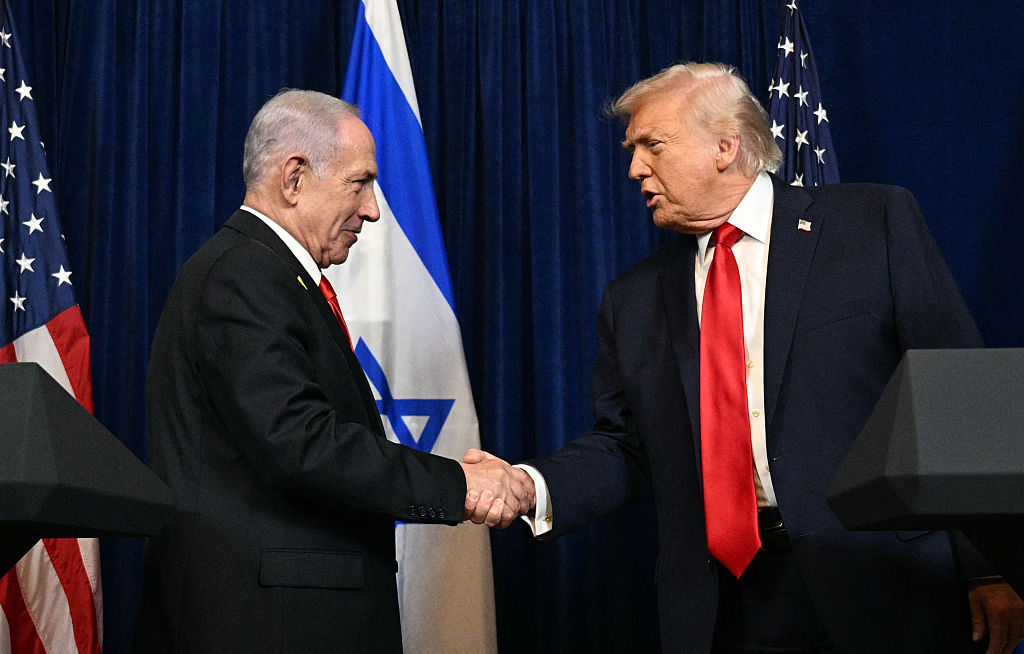 Israeli Prime Minister Benjamin Netanyahu and U.S. President Donald Trump during a joint press conference at Trump's Mar-a-Lago residence in Palm Beach, Fla., on Dec. 29, 2025 —Jim Watson—AFP/Getty Images
With days to go before a crucial general election in Israel, Prime Minister Benjamin Netanyahu received a last-minute endorsement for re-election on Sunday from his longtime friend, U.S. President Donald Trump.
“Bibi Netanyahu has been a Great Warrior Prime Minister, and an even greater Partner for Peace in combatting the Islamic Republic of Iran,” Trump posted on Truth Social Sunday. “Please let this Letter serve to represent my Complete and Total Endorsement of Bibi Netanyahu in his upcoming Race for Re-Election as Prime Minister of Israel.”
It’s a ringing, albeit late, recommendation for someone Trump hasn’t seen eye-to-eye with in recent months over how Netanyahu’s government has navigated the Middle East conflict. Trump explained his delayed endorsement to Axios reporter Barak Ravid, saying that he’d always meant to endorse Netanyahu because they “have a good relationship, and because we’ll continue to do good things together.”
Trump said in his post that, if Israel were to have “the wrong Leader, which would be anyone other than Bibi,” the U.S. would be left alone to face the Iran threat. The U.S. and Israel jointly struck Iran in late February, kickstarting a conflict that has not only upended global markets but also thrust Middle Eastern regional security into turmoil.
“Bibi Netanyahu has been Strong, Brave, and Brilliant in the face of tremendous opposition, including that coming from even Israel, itself,” Trump added, in apparent reference to Netanyahu’s domestic challenges, including a corruption trial, some of which the U.S. President has previously tried to influence. “Despite all of that, he has endured and, in fact, he has thrived!”
Trump’s endorsement comes just before Israelis head to the polling booths on Oct. 27, some three years after the country’s war with terror group Hamas ignited. Since then, Netanyahu has been criticized by opponents for failing to deliver on his promise of restoring regional security.
Public disillusionment with Netanyahu was among several factors that led to the formation of the Yashar! (“Straight!”) Party, whose founder, former Israel Defense Forces Chief of Staff Gadi Eisenkot, is challenging Netanyahu for the premiership. Eisenkot’s son and nephews were killed in the war in the Gaza Strip.
It’s unclear how big of an electoral boost Netanyahu will get from Trump’s endorsement. An opinion poll from nonprofit The Jewish People Policy Institute in Jerusalem released this month shows that most Israelis still see Trump as a great friend of Israel. A separate opinion poll from JPPI, however, shows their trust in him has eroded. Eisenkot, reacting to Trump’s endorsement, said at an event in Tel Aviv that while he appreciates Trump, only Israelis will decide on their next Prime Minister. Some surveys show Yashar! is in a tight race with Netanyahu’s right-wing Likud party.
Netanyahu nonetheless thanked his “dear friend Donald” in a video posted on social media, saying he was “honored” and “humbled” by Trump’s backing, adding that the U.S. was “fortunate” to have Trump as its leader in the fight to denuclearize Iran.
Trump and Netanyahu’s fraught friendshipEven before Trump became U.S. President, he had publicly endorsed Netanyahu, though Trump, still only a TV personality in 2013, said that the Israeli politician asked for it. Since Trump was first elected, the two have been political allies and friends. Their relationship, however, has seen a number of ups and downs since Trump returned to the White House last year.
Netanyahu was the first foreign leader invited to the White House during Trump’s second-term Administration, and he has met with Trump repeatedly since. Netanyahu pushed Trump to target three key Iranian nuclear facilities in June last year. Last November, Trump sent a letter to Israeli President Isaac Herzog, asking him to pardon Netanyahu on his drawn out corruption trial, which the U.S. President deemed to be “political, unjustified prosecution.”
On Feb. 11, when Trump and Netanyahu met in a closed-door meeting at the White House, Israel and the U.S. failed to reach an agreement on how to proceed with Iran. Netanyahu has long sought to decapitate the Iranian leadership, but Trump at the time insisted on negotiations. Netanyahu, nonetheless, reportedly pressed Trump to launch the Iran operation later that month.
Since their last meeting, their relationship has markedly shifted. Trump has since tried to find an off-ramp to the war in Iran, but Israel’s actions made such peace deal talks thorny.
In March, after Israel attacked Iran’s South Pars gas field in the Persian Gulf, Trump said he told Netanyahu to stop such attacks. Then, on April 17, Trump declared on Truth Social that Israel was “PROHIBITED” from further bombing Lebanon, where it was at war with the militant group Hezbollah. Netanyahu, however, insisted that Israeli troops would remain in southern Lebanon and that security threats persisted—complicating Washington’s efforts toward peace as Tehran indicated that any deal would need to include a halt of the attacks in Lebanon.
When Netanyahu in June ordered strikes on a Hezbollah stronghold in Beirut to retaliate against the group’s alleged attacks on Israel, Trump phoned and excoriated the Israeli Prime Minister, reportedly calling him “f-cking crazy.” Asked by CNBC about the call, Netanyahu said: “We have common goals. Sometimes we have, as in the best of families, you have these tactical disagreements. We always find a way to work them out, and we do so as great friends.”
During Netanyahu’s seventh U.S. visit in July, Trump went public with his frustration. During a telephone interview on Fox News, Trump criticized Netanyahu over reports that the Israeli leader planned to share intelligence showing Iran rebuilding its nuclear program. The U.S. President said: “I don’t need Bibi to tell me that. Bibi is telling me that because he wants me to stay involved.”
Netanyahu is part of Trump’s U.N. alternative called the Board of Peace, though Israel broke again with the U.S. President by rejecting having Turkish and Qatari representatives on the board’s subpanel, the Gaza Executive Board, which is tasked with overseeing post-war reconstruction in the Gaza Strip.
Then Netanyahu rejected the Board of Peace’s 15-point plan to advance a cease-fire in the Gaza Strip and insisted that Israel would not withdraw before Hamas fully disarmed.
In Trump’s extensive interview with TIME in late September, Trump did not answer directly when asked repeatedly if the Israeli population should give Netanyahu another term. “I can only say that I’m not involved in politics anymore,” the U.S. President said.
But despite the lack of clear endorsement then, Trump seemed confident that “Bibi” could still win. “People have written off Bibi many, many times, just like they’ve written off me many, many times,” Trump told TIME. “I wouldn’t underestimate Bibi.”
Categories: ENTERTAINMENT RSS Streams
Who Will Benefit From the AI Revolution?
 —Sergey Balakhnichev—Getty Images
The debate about how to control AI and limit its potential for damage is healthy and necessary. It is also unavoidable and urgent.
But this is not the only vital debate. There are also vital questions about how the upsides of AI are shared fairly. Business as usual has left the world's poorest people behind, so far. And for those caught up in conflict—in places like Sudan, Ukraine, Gaza, and Afghanistan—AI can help meet urgent needs.
It is clear to me that the world has more resources to do good than at any time in human history, but too often, we don't distribute them where they are most needed. Now, AI stands to create even more resources in the form of free time, insights, and funds. And they need to be spent in the right places.
The AI revolution is going to mint a new generation of billionaires and millionaires—and with them, a new generation of philanthropists; a term stemming from the Ancient Greek philanthropia, meaning “love of humanity”. It’s a reminder that the act of giving begins with some of the most fundamentally human impulses: care, love, empathy, and selflessness.
Maybe this explains why Effective Altruism—the idea that generosity should be subjected to evidence and calculation—seemed counterintuitive. But I never understood why. After all, who wants ineffective altruism? We should all be asking where our money can do the most good.
Organizations working at the sharpest end of the world’s toughest problems—like the one I lead—need philanthropy to be the smart money: hard-headed as well as big-hearted, focused on outcomes not visibility, concerned to add value not just kudos. Results, not just responsibility, should be the watchword.
Fortunately, there’s been an evidence revolution over the last 20 years. We know a whole lot more about what actually works. This makes giving much easier. Distance no longer needs to be the enemy of confidence.
In fact, there is every reason to think globally, not just locally, about where to make a difference. As the world has become more and more connected, governments have retreated from global problems. For instance, official development assistance funds from Organisation for Economic Cooperation and Development (OECD) countries dropped by a historic 23.1% in 2025. Now, we need new philanthropy to provide some balance in a world that is clearly out of balance.
Around 94% of American philanthropy is spent in the U.S. But the rest of the world is not just where the needs are greatest—from acute childhood malnutrition to violence against women—but where the gains from philanthropy can be greatest.
The 20 countries at greatest risk of a worsening humanitarian crisis, ranked by the International Rescue Committee (IRC) annually in our Emergency Watchlist, represent just 12% of the global population, but 90% of those in humanitarian need. In these places, led by regions like Sudan, Gaza, and South Sudan, children are three times more likely to die before their fifth birthday and 10 times more likely to grow up in extreme poverty than children born elsewhere. The people living here have done the least to contribute to climate change, but face the combined pressures of climate change and conflict—and receive the least support to adapt.
If philanthropy and its “love of humanity” belong anywhere, it is these areas. And just in time, humanitarians have developed increasingly sophisticated tools to transform what we know about how to help people survive through and recover from crisis. Real-time data, randomized controlled trials, cost-effectiveness and cost-efficiency analysis, plus predictive analytics, have transformed the evidence base and the basis for action.
The IRC alone has conducted over 50 impact evaluations since 2020 as well as 500 cost analyses, allowing us to measure not simply whether an intervention works, but how much it costs and how much further each additional dollar can go. So we don't need to be daunted by the big numbers highlighting the 43 million children who are acutely malnourished, the 20 million kids without full immunization, over 300 million people hungry, and hundreds of thousands of women dying in childbirth in fragile states alone. These are problems that we actually know how to solve at manageable, in fact low, cost.
For example, we have learned how to deliver vaccine shots—40 million of them—at just $2 a shot in places like Somalia, South Sudan, and Yemen, negotiating with armed groups along the way to get access to populations otherwise cut off from healthcare. This offers lifelong benefit, not just a short-term palliative.
We’ve shown how local health workers can more simply diagnose and treat acute malnutrition directly in communities where crisis-affected children live. This approach offers a 92% recovery rate, and earlier interventions can catch malnutrition before it becomes severe. The result is that we are 20% more cost-effective, allowing us to help more kids for the same amount of money.
There are more examples. We've demonstrated that violence against women and violence against kids can be reduced by over 70% when they are tackled together. We have also proven the benefits of giving aid in advance of climate disasters, not just in reaction to them: in Afghanistan, our clients were three times less likely to fall further into poverty.
Of course, the contexts stricken by war and state failure are challenging. But that makes the philanthropic imperative towards the people who live there all the more urgent.
The same technology that is delivering fortunes in Silicon Valley can also deliver help to the least fortunate. IRC’s global digital helpdesk, Signpost, has reached 20 million people forced to flee crisis in 12 languages with timely, life-saving information. Leading tech companies helped us develop it. In Somalia, IRC teams employed anticipatory action ahead of last year’s devastating drought, a disaster that typically drives cholera outbreaks. Again, it took partnership of financial support, technical know-how, and NGO savvy.
In all these areas, the traditional aid system is falling short. Too often, climate and humanitarian systems work in separate silos. Despite the evidence, less than 1% of aid is invested in anticipatory action. Every government donor has its own bureaucracy, with different reporting systems, compliance requirements, and measurement metrics.
This is the syndrome that philanthropy can help break. By focusing on what works, measuring what counts, and investing in innovation. The risk does not lie in action; it lies in inertia.
We know more than ever about what works in humanitarian crises, and we have new tools capable of extending those gains. The opportunity for this generation of philanthropists is not simply to give more. It is to take what we have learned and apply it where the stakes are highest. The real test isn't how much they give. It’s where.
Categories: ENTERTAINMENT RSS Streams
Ramaswamy Facing Tougher Fight Than Republicans Had Expected in Ohio
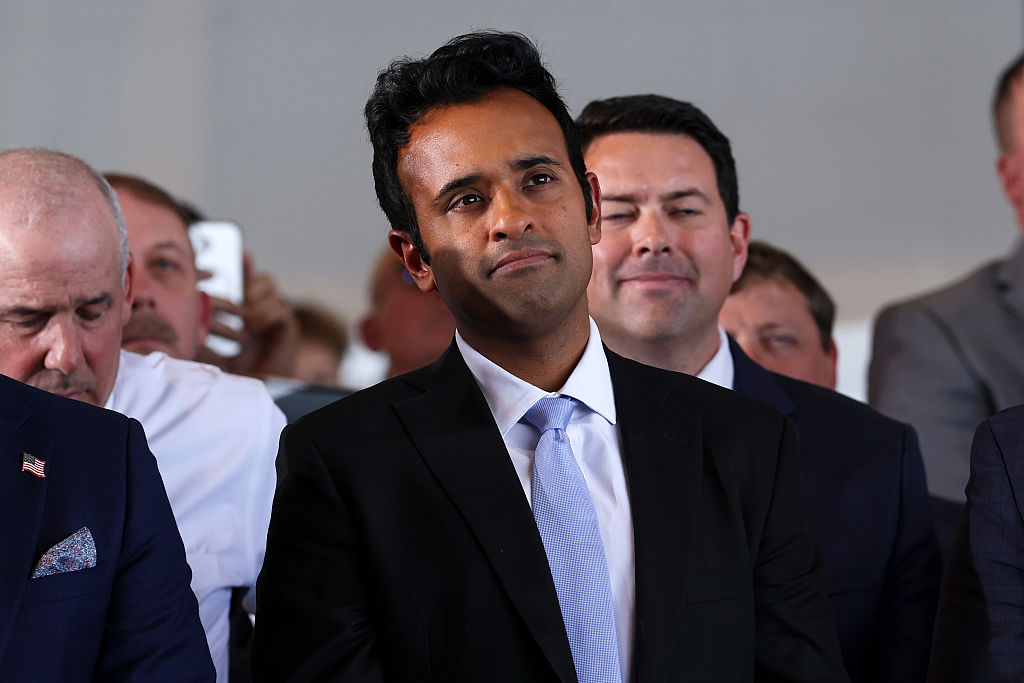 Vivek Ramaswamy listens as Vice President JD Vance speaks during a rally for Ramaswamy and other Republican candidates on Oct. 09, 2026 in Lima, Ohio. —Samuel Corum—Getty Images
On the day Vivek Ramaswamy made official his run for Ohio Governor, President Donald Trump did not dally.
“He will be a GREAT Governor of Ohio, will never let you down, and has my COMPLETE AND TOTAL ENDORSEMENT!” the President wrote on Truth Social on Feb. 24 of last year, within hours of Ramaswamy kicking off his campaign.
Trump’s post essentially cleared what had been expected to be a crowded GOP field, boxing out the likes of state Attorney General Dave Yost, state Treasurer Robert Sprague, and Lieutenant Governor Jim Tressel in a state where Republicans felt dominant. It also effectively gave Ramaswamy almost two years to focus on keeping the Governor’s mansion in GOP hands. But the very connections to Trumpism that fueled Ramaswamy’s fast political rise are now giving his party reason to worry, as polls show him trailing Democrat Amy Acton, a former state health chief and a first-time candidate.
“Something is happening here. I just can’t tell you what,” says one Ohio Democratic strategist, reflecting the apprehension pervasive in both parties right now.
On the campaign trail, Ramaswamy occasionally moderates his image as the brash MAGA warrior railing against “the woke left,” pitching tax cuts and economic development when he’s with suburban crowds and chamber of commerce types. But he can still come off at times as a pugilistic troll. He has promised to be "the most conservative Governor in Ohio's history,” defying Ohio’s history of moderate conservatives who have governed the Heartland homebase. He has embraced AI data centers in a state where they are far from popular. And he has not shrunk from Trumpian hardline immigration policies, especially when he appears with Trump.
"As Americans, we believe in merit, that the best person gets the job, regardless of their skin color, that you are judged not on the color of your skin, but on the content of your character and your contributions,” Ramaswamy said during an Oct. 12 rally with Trump in Youngstown, where Acton grew up. “That is who we are as Americans."
Ramaswamy has not developed a thicker skin than when he ran for the White House just two years ago. In July, when confronted by hecklers at Xavier University in Cincinnati, he simply walked off stage: “Peace out, see you guys.”
The polls still show a close-range contest, but in the increasingly nasty ad war, the spending suggests a far more lopsided fight. Ramaswamy and his supporters have now run $101 million in ads against Acton, with $36 million of that coming from Ramaswamy himself.
Acton and groups supporting her have spent about one-third of the Ramaswamy media wave, much of it describing Ramaswamy as a “swindler” who conned his way to a fortune and harnessing anti-billionaire sentiment.
“This is a guy who has been flying around the state on his corporate jet. Ohio is not a huge state geographically. It’s a state that’s incredibly driveable,” says David Cohen, the director of the Applied Politics Program at the University of Akron. “He was the worst possible choice for Republicans, not that they really had a choice.”
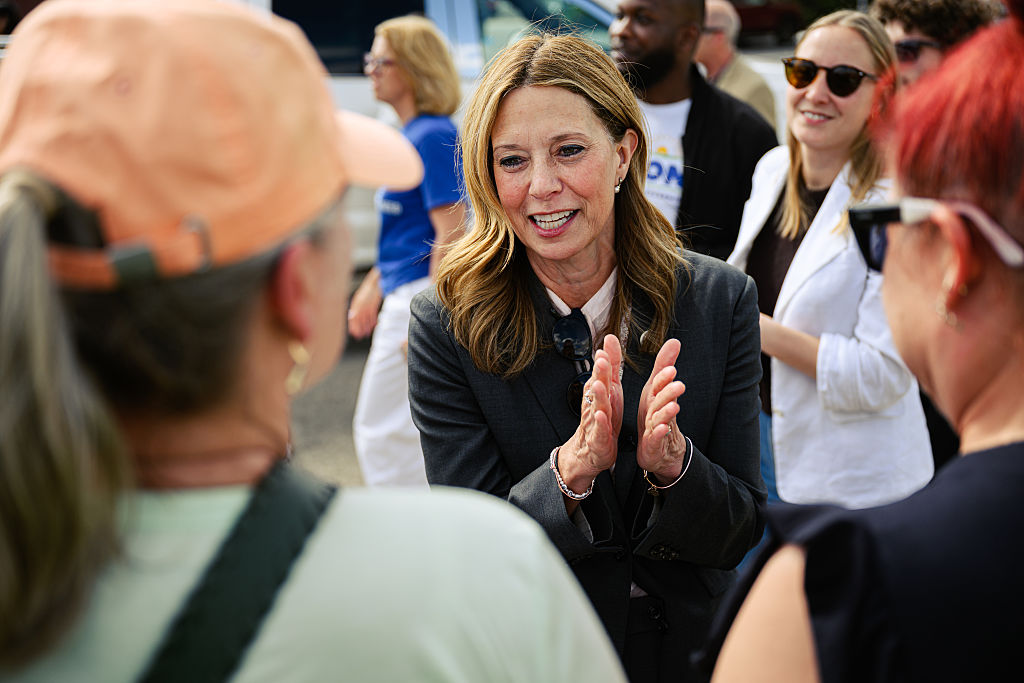 Dr. Amy Acton speaks with supporters during a rally in Cincinnati on April 28, 2026. —Jon Cherry_Getty Images
A loss for Ramaswamy would be a stunning reversal of fortunes for Ohio Republicans. Once seen as a quintessential swing state, Trump won Ohio during all three of his presidential bids with margins between eight and 11 points.
If Democrats can show a rebound in Ohio, the state may actually wind up back on the must-visit list for 2028 contenders from both parties. After all, states like Georgia and Arizona were also once solidly red until break-out candidates—backed by party spending—upended those assumptions.
“Calm down,” says a consultant who has worked with Ohio candidates in past cycles, when asked about Democrats’ optimism. “It’s still Ohio.”
Ramaswamy’s rise via TrumpFor a while there two years ago, Ramaswamy seemed like the most obvious heir to Trumpism. When he launched his presidential bid in 2025, he couched it in effusive praise for the then-former President, to the point that he sometimes sounded like a Trump surrogate in the GOP debates that Trump refused to attend.
After a weak showing in Iowa, Ramaswamy ended his campaign and quickly folded into the broader MAGA-verse. He was chosen by Trump to help Elon Musk upend the federal government at the Department of Government Efficiency, before dropping out of that partnership.
But the talent for going viral that helped Ramaswamy gain a national profile has proved less successful this election cycle in Ohio. Social media videos of him hitting tennis balls and baseballs while listing his policy proposals have provided a font of online mockery. He hastily left Ohio State’s season opener after being booed and heckled. Later, he faced criticism for having worn a knock-off Ohio State jersey to the game.
Ramaswamy has also struggled to navigate his identity as a Hindu and the son of immigrants from India in the modern GOP. In the gubernatorial primary, auto entrepreneur Casey Putsch ignored Trump’s endorsement of Ramaswamy and vied for the nomination, pitching himself as an “America First” alternative to Ramaswamy. In one YouTube spot, Putsch hoisted a rifle and challenged Ramaswamy to a game of “cowboys and Indians.”
While Ramaswamy easily won his party’s nomination, almost one-in-five votes in the primary were for Putsch, a hint that Ramaswamy’s appeal had its limits even within his own party. “One of the storylines here is a man who is Indian American and whose religion is Hindu,” says Christopher Devine, a political science professor at the University of Dayton, says. “There are a lot of members of the Republican base who may have difficulty voting someone of his demographic profile.”
Amid efforts by both campaigns to push policy ideas like tax cuts and education reform, the ad war has boiled down to attacks portraying Ramaswamy as a conman and Acton as a drunk. The latter is based on an August 2019 incident in which police responded to an incident in Acton’s home that Acton has accused Ramaswamy of dramatically mischaracterizing, to the point that she refused to share a debate stage with him. Ramaswamy has also refuted allegations his fortune came from misleading investors.
Devine says the tone of the attacks is a shift from the Senate race, where former Democratic Sen. Sherrod Brown and current Republican Sen. Jon Husted both have extensive records for each side to focus on. “In the Governor’s race, there’s no record to pick apart. Without much of a track record in politics to run on, they’re focusing on personal attacks against the other,” Devine says.
Ohio polling raises questionsAs polling consistently shows an advantage for Acton, Republicans are increasingly arguing that the polls may be wrong by just enough to give Ramaswamy the win. One proof point is 2018, when some polls showed Brown winning re-election by double digits. By the time votes were cast, Brown won by less than seven points
Republicans, heading into a make-or-break stretch of voting, are repeating those statistics to make the case that the polling once again is under-counting Republican voters.
Cohen, the political science professor, doesn’t share that view of skewed polling: “I’m not skeptical at all. All of the polls are trending in the right direction for Acton.”
Democrats, for their part, are viewing the race as a tie, at best. Among their reasons for concern is Ohio’s poor track record when women are on the ballot. The state’s voters have never elected a woman as Governor and rejected both Hillary Clinton and Kamala Harris as presidential contenders.
Yet given the strong headwinds against Republicans’ national brand, they can’t hide their bullishness toward the races for Governor and Senate, where polls show Brown up over Husted. “I haven’t felt this good, like we have a chance, in a while,” says a second Ohio Democratic strategist. But, he adds, given how tight both races may be, no one should expect an early race call once the polls close.
Categories: ENTERTAINMENT RSS Streams